

 Posted by
 The Hidden Role Thousands of Indians Play in Cybercrime — Often Without Realizing It
Introduction: “Just Use My Account, I’ll Pay You ₹5,000”
It usually starts small.
A message. A call. A “job offer.”
“Bhai, just let some money come into your account and transfer it. Easy work. You’ll get commission.”
No hacking.
No dark web.
No coding.
Just… your bank account.
Weeks later, your account is frozen.
Police call.
Cybercrime case.
And suddenly, you’re not a victim anymore.
You’re a “money mule.”
This is one of the fastest-growing cybercrime patterns in India — and thousands of people, especially students and freelancers, are getting trapped in it.
Let’s break this down deeply.
💰 What Is a Money Mule Account?
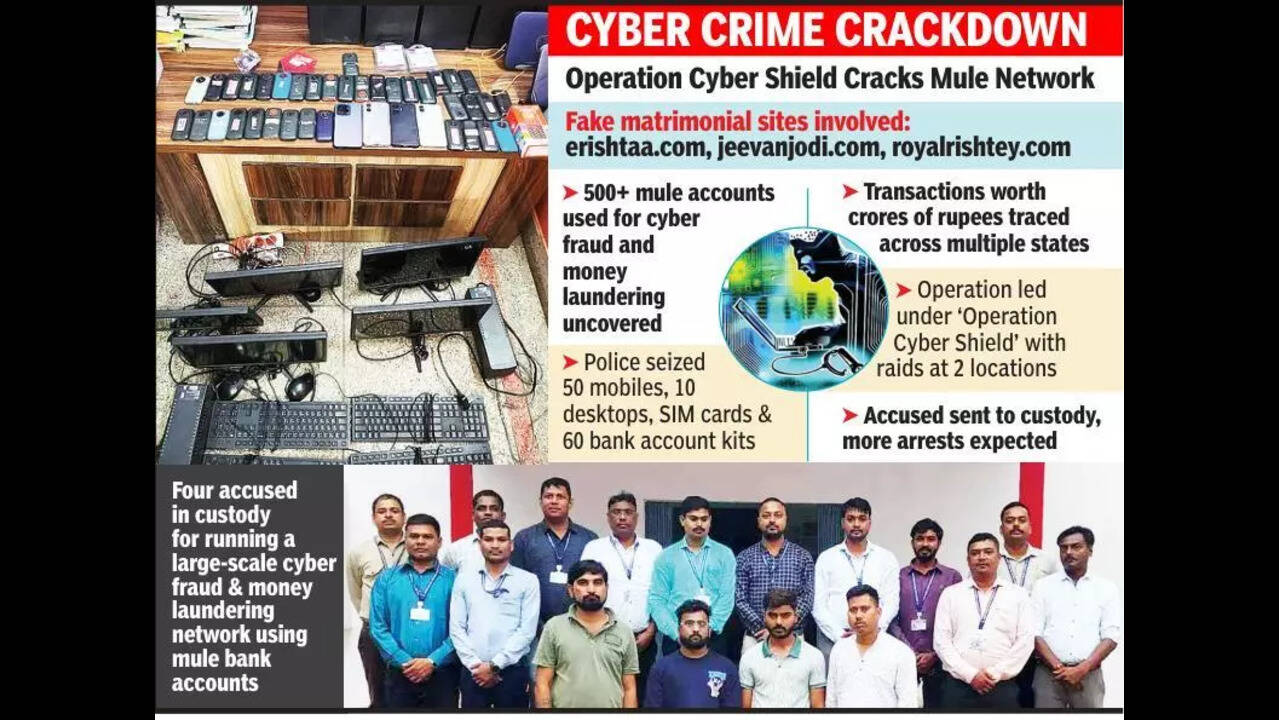

A money mule account is a bank account used to:
- Receive illegal money (fraud/scam funds)
- Transfer it to another account
- Withdraw and hand over cash
In simple terms:
You become a middleman in a crime you didn’t commit — but you helped move.
🔓 How Money Mule Networks Work in India
Let’s understand the full system.
🧠 Step 1: The Original Crime
This could be:
- UPI scam
- OTP fraud
- Fake investment scheme
- Loan app scam
- Phishing attack
Victim loses money.
🔗 Step 2: Money Enters Mule Account
Instead of going directly to the criminal:
👉 It goes to your account
Why?
To hide the real criminal.
🔄 Step 3: You Transfer the Money
You are told:
- “Send to this account”
- “Withdraw cash and give someone”
- “Convert to crypto”
You follow instructions.
🕳️ Step 4: Money Disappears
Funds move across:
- 3–10 accounts
- Different states
- Sometimes crypto wallets
Trail becomes complex.
🚨 Step 5: Investigation Starts
Police track the transaction chain.
Guess what?
Your account is right there.
📊 Why Criminals Use Money Mules
Because:
- It hides their identity
- It breaks the money trail
- It delays investigation
- It shifts suspicion to others
You are not the mastermind.
But you are part of the chain.
🧠 Types of Money Mules in India
🟢 1. Unaware Mules
- Don’t know it’s illegal
- Think it’s a job
- Often students
🟡 2. Negligent Mules
- Suspect something is wrong
- Ignore red flags
- Continue for money
🔴 3. Active Mules
- Fully aware
- Work with criminals
- Take commission
🚨 Real-Life Example (India)
Case: College Student in Bengaluru
- Offered “part-time job”
- Allowed account usage
- Received ₹2 lakh
- Transferred to multiple accounts
Outcome:
- Account frozen
- Police case
- Passport issues
Case: Freelancer in Delhi
- Took payment on behalf of “client”
- Forwarded funds
- Linked to scam network
Outcome:
- Cybercrime investigation
- Bank restrictions
- Legal complications
⚖️ Why People Get Arrested
Here’s the harsh reality:
“I didn’t know” is not always a strong legal defense.
Authorities consider:
- Did you move the money?
- Did you benefit?
- Was there a pattern?
- Did you ignore warning signs?
If yes → liability increases.
🧠 Key Legal Concept: Participation
Even if you didn’t scam anyone:
👉 Moving illegal money = participation
Under Indian law:
- IT Act
- IPC fraud sections
You can face:
- Account freeze
- Police questioning
- Arrest (in serious cases)
🚩 Red Flags of Money Mule Scams
If you see these — RUN.
- “Use your bank account for transactions”
- “Commission per transfer”
- “No skills required”
- “Work from home, instant money”
- “Just receive and send funds”
These are classic mule recruitment tactics.
💸 How Much Do Mules Get Paid?
Typical:
- ₹500 – ₹5,000 per transaction
- Sometimes percentage (1–5%)
Looks easy.
Costs everything.
🔍 How Police Track Mule Accounts
Investigators use:
- Bank transaction trails
- UPI logs
- KYC details
- IP addresses
- Device fingerprinting
Even if money moves across multiple accounts:
👉 The chain is traceable.
🧊 Why Mule Accounts Get Frozen First
Because:
- They are easiest to identify
- Funds pass through them
- Banks act quickly
That’s why many innocent people first notice:
“My account is frozen.”
🛡️ How to Protect Yourself
🔒 1. Never Let Anyone Use Your Account
No exceptions.
💳 2. Don’t Accept Unknown Transfers
Especially if asked to forward.
📞 3. Avoid “Easy Money” Offers
If it sounds too easy — it’s illegal.
📄 4. Keep Transaction Records
Always know:
- Who paid you
- Why
- Proof of work
🧠 5. Trust Your Instincts
If something feels wrong — it is.
🚨 What To Do If You Accidentally Became a Mule
Act fast.
🏃 Immediate Steps:
- Stop all transactions
- Inform your bank
- Call 1930 (Cybercrime helpline)
- File complaint on cybercrime.gov.in
- Keep all proof
Early action can reduce damage.
🏛️ System in India
Oversight includes:
- Reserve Bank of India
- Banks’ AML systems
- Cybercrime police
India is actively cracking down on mule networks.
📉 Why This Problem Is Growing
Because:
- Digital payments exploded
- Youth seeking quick income
- Low awareness
- High unemployment pressure
- Easy account opening
Criminals exploit desperation.
🧠 Final Truth
Money mule scams are not about hacking.
They are about:
Using people as tools.
And once you’re in:
- You lose control
- You face consequences
- You struggle to prove innocence
🎯 Conclusion: Don’t Rent Your Identity
Your bank account is not just a wallet.
It’s your identity.
Letting someone use it is like:
Letting someone commit a crime in your name.
No amount of “easy money” is worth that risk.
📣 Call to Action
If you’re reading this:
- Share it with students
- Share it with job seekers
- Share it with anyone doing online work
Because most victims don’t even know they’re part of a crime.
❓ FAQ
What is a money mule account?
A bank account used to transfer illegal funds on behalf of criminals.
Is being a money mule illegal in India?
Yes. It can lead to legal action, even if you were unaware.
How do people become money mules?
Through fake job offers, scams, or by agreeing to transfer money for commission.
Can I go to jail for being a money mule?
Yes, in serious cases.
How do I know if I am a mule?
If you receive money and are told to transfer it without clear reason.
What should I do if my account is used?
Immediately report to bank and cybercrime authorities.
 Spyboy blog