
 Posted by
 In today’s interconnected world, network security is of paramount importance. As more and more services and businesses rely on the internet, the threat of cyberattacks continues to grow. One of the most common and devastating types of attacks is the TCP SYN flood attack. In this comprehensive guide, we’ll delve into what a TCP SYN flood attack is, how it works, and the measures you can take to defend your network against it.
Table of Contents
- What is a TCP SYN Flood Attack?
- How Does a TCP SYN Flood Attack Work?
- Motives Behind TCP SYN Flood Attacks
- Signs of a TCP SYN Flood Attack
- Mitigating and Preventing TCP SYN Flood Attacks
- What is a TCP SYN Flood Attack?
A TCP SYN flood attack is a type of Distributed Denial of Service (DDoS) attack that exploits vulnerabilities in the TCP handshake process. To understand this attack, it’s important to grasp the fundamentals of how TCP (Transmission Control Protocol) works.
TCP is a connection-oriented protocol used to establish reliable connections between two devices over a network. It follows a three-way handshake process to set up a connection:
- The client sends a SYN (synchronize) packet to the server to request a connection.
- The server responds with a SYN-ACK (synchronize-acknowledge) packet, indicating its willingness to establish a connection.
- The client sends an ACK (acknowledge) packet to confirm the connection.
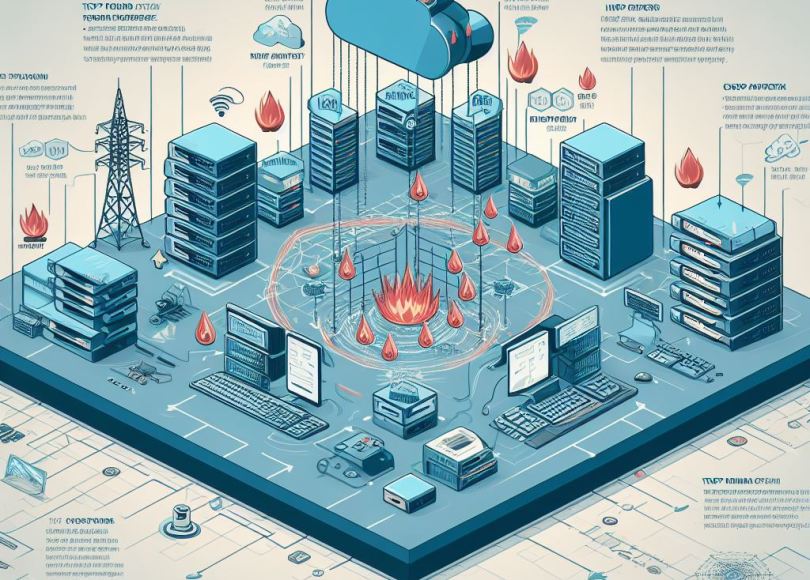
In a TCP SYN flood attack, the attacker sends a flood of SYN packets to a target server, overwhelming it with half-open connections. This consumes server resources and leaves little room for legitimate connections, effectively causing a denial of service.
- How Does a TCP SYN Flood Attack Work?
A TCP SYN flood attack typically follows the following steps:
a. The attacker initiates the attack by sending a large number of SYN packets to the target server. These packets contain fake source IP addresses, making it challenging to trace the attacker.
b. The target server, believing these requests are legitimate connection attempts, allocates resources to handle each one by creating a half-open connection entry.
c. Since the server expects the ACK response, it holds these half-open connections open, waiting for the final step of the handshake.
d. As more and more SYN packets flood in, the server’s resources get exhausted, and it cannot establish new legitimate connections.
e. Eventually, the server becomes overwhelmed, causing legitimate users to experience slow response times or even complete service unavailability.
- Motives Behind TCP SYN Flood Attacks
TCP SYN flood attacks can be motivated by various factors, including:
a. Revenge: Attackers may target a specific organization or individual as an act of revenge for personal or ideological reasons.
b. Financial Gain: Some attackers launch SYN flood attacks to extort money from organizations by threatening to disrupt their services.
c. Competition: Rival businesses or entities might use such attacks to gain a competitive advantage or disrupt their competitors’ services.
d. Hacking Groups: Organized hacking groups may launch SYN flood attacks for political or ideological reasons, attempting to disrupt government services or corporations.
- Signs of a TCP SYN Flood Attack
Detecting a TCP SYN flood attack is crucial for timely mitigation. Here are some common signs:
a. High CPU and Memory Usage: The server experiences a significant increase in CPU and memory usage due to the flood of half-open connections.
b. Network Congestion: Network bandwidth might become congested due to the influx of SYN packets.
c. Service Unavailability: Users may experience slow response times or complete service unavailability, indicating that the server is struggling to handle the flood of connections.
d. Logs Show Unusual Activity: Network logs will likely show a sudden surge in connection attempts.
e. SYN-ACK Responses Without Subsequent ACK: The server may accumulate many SYN-ACK responses without receiving the corresponding ACK packets, which is a clear sign of a SYN flood attack.
- Mitigating and Preventing TCP SYN Flood Attacks
Protecting your network from TCP SYN flood attacks involves a combination of proactive measures and reactive responses:
a. Firewalls and Intrusion Prevention Systems (IPS): Utilize firewalls and IPS devices to filter out malicious traffic and block IP addresses involved in the attack.
b. Rate Limiting: Implement rate limiting to restrict the number of incoming connections per second from a single IP address.
c. Load Balancers: Distribute incoming traffic across multiple servers using load balancers to ensure that no single server becomes a target for SYN flood attacks.
d. TCP/IP Stack Hardening: Fine-tune the server’s TCP/IP stack parameters to handle connection requests more efficiently and limit the number of half-open connections.
e. Anomaly Detection: Employ anomaly detection systems to identify unusual patterns of traffic and trigger alerts or countermeasures.
f. Content Delivery Networks (CDNs): CDNs can mitigate the impact of SYN flood attacks by distributing traffic and filtering out malicious requests.
g. DDoS Mitigation Services: Consider subscribing to DDoS mitigation services that can absorb and filter malicious traffic before it reaches your network.
h. Regular Patching and Updates: Keep your servers and network infrastructure up to date with the latest security patches and updates.
Conclusion
TCP SYN flood attacks are a persistent and challenging threat in today’s digital landscape. Understanding their inner workings and being prepared to defend against them is crucial for ensuring the availability and reliability of network services. By employing a combination of security measures, proactive network monitoring, and a swift response to anomalous activities, organizations can mitigate the impact of TCP SYN flood attacks and safeguard their network infrastructure. In an age where cyber threats continue to evolve, network security remains an ongoing and dynamic challenge that demands attention and vigilance.
 Spyboy blog