

 Posted by
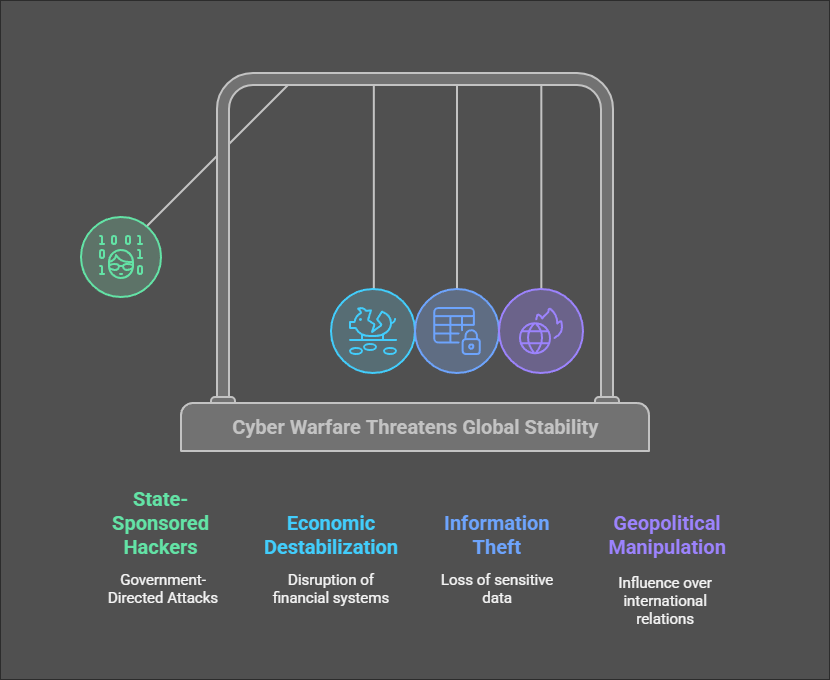
 In today’s interconnected world, cyber warfare has become a significant threat, with nation-states engaging in digital espionage, cyber sabotage, and large-scale hacking campaigns. Unlike conventional cybercriminals who act for financial gain, state-sponsored hackers work under the directive of governments, targeting rival nations’ infrastructure, corporations, and even civilians. These attacks can destabilize economies, steal sensitive information, and manipulate geopolitics without firing a single bullet.
What Are State-Sponsored Cyber Attacks?
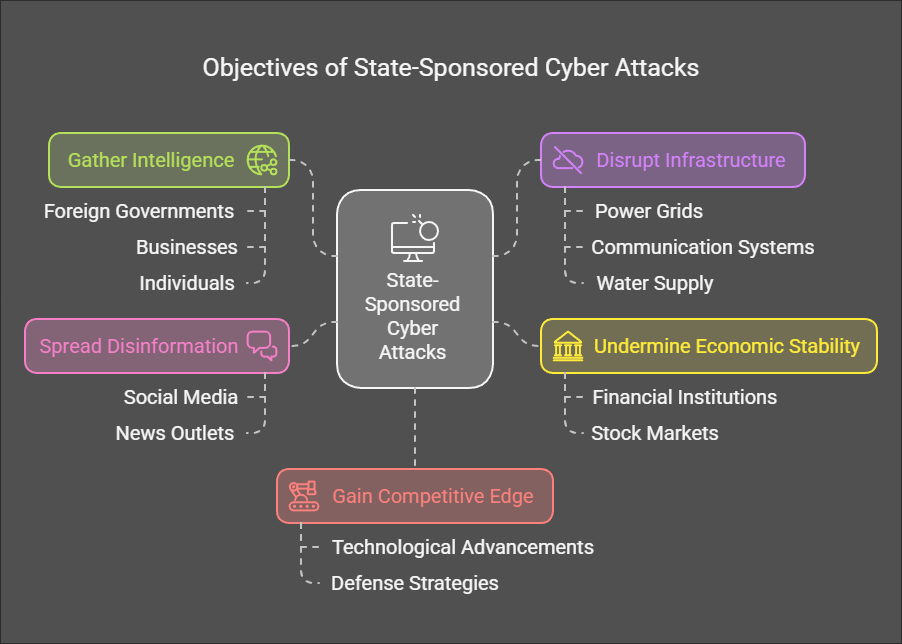
State-sponsored cyber attacks are malicious digital activities conducted by government-affiliated groups. These attacks are usually more sophisticated, well-funded, and persistent compared to independent hacking attempts. Governments leverage these attacks to:
- Gather intelligence on foreign governments, businesses, and individuals.
- Disrupt critical infrastructure (power grids, communication systems, water supply, etc.).
- Undermine economic stability by targeting financial institutions.
- Spread disinformation and influence political events.
- Gain a competitive edge in technological advancements and defense strategies.
Notorious Examples of State-Sponsored Cyber Attacks
State-backed hacking groups have been involved in numerous high-profile attacks over the years. Some notable incidents include:
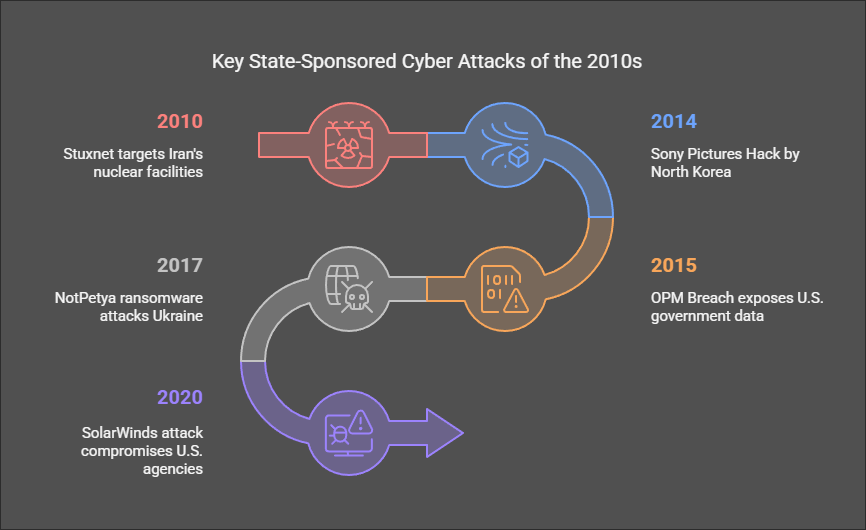
- Stuxnet (2010) – One of the most infamous state-sponsored cyber attacks, Stuxnet was a highly sophisticated worm allegedly developed by the U.S. and Israel. It targeted Iran’s nuclear enrichment facilities, causing physical damage to centrifuges and setting back Iran’s nuclear program significantly.
- Sony Pictures Hack (2014) – The North Korean hacker group “Lazarus” was accused of launching an attack on Sony Pictures Entertainment in response to the movie The Interview, which depicted an assassination attempt on North Korean leader Kim Jong-un. The hackers leaked confidential data and disrupted Sony’s operations.
- U.S. Office of Personnel Management (OPM) Breach (2015) – Chinese state-sponsored hackers allegedly stole the personal records of over 21 million U.S. government employees, including fingerprints and security clearance information, posing a severe threat to national security.
- NotPetya Ransomware (2017) – Initially disguised as ransomware, NotPetya was later revealed to be a Russian cyberattack against Ukraine. It crippled Ukrainian infrastructure and global companies like Maersk, FedEx, and Merck, causing billions of dollars in damages.
- SolarWinds Attack (2020) – A sophisticated supply chain attack attributed to Russian state-sponsored hackers, which compromised U.S. government agencies and private companies by injecting malicious code into SolarWinds’ software updates.
Common Targets of State-Sponsored Cyber Attacks
State-backed cyber actors strategically choose their targets based on national interests and geopolitical tensions. The most common targets include:
1. Government Institutions
State actors infiltrate foreign governments to steal classified information, disrupt operations, or manipulate political outcomes. Ministries, intelligence agencies, and defense sectors are primary targets.
2. Critical Infrastructure
Power grids, water supply systems, transportation networks, and healthcare facilities are vulnerable to cyber attacks that can cause mass disruption and panic.
3. Financial Institutions
Banks, stock markets, and cryptocurrency exchanges are frequently attacked to either disrupt economies or steal funds for covert operations.
4. Technology and Defense Companies
Cutting-edge military technologies and corporate intellectual property are prime targets. State-sponsored groups steal blueprints, research data, and defense strategies to gain an advantage.
5. Media and Social Platforms
Disinformation campaigns, fake news, and election interference have become a major concern. State-sponsored groups use cyber tactics to influence public perception and manipulate democratic processes.
How Can Nations Defend Against State-Sponsored Cyber Attacks?
To counter state-sponsored cyber threats, governments must implement robust cybersecurity measures. Some key strategies include:
1. Strengthening Cyber Defenses
- Implement multi-layered security architectures.
- Regularly update and patch software to prevent exploitation of vulnerabilities.
- Utilize AI-driven threat detection to identify and mitigate attacks in real time.
2. International Collaboration
- Countries must collaborate on intelligence sharing to counter cyber threats.
- Establish global cybersecurity alliances and agreements to deter state-sponsored attacks.
- Work with private tech firms to develop countermeasures against cyber threats.
3. Cyber Hygiene and Public Awareness
- Educate government employees, businesses, and the general public about cybersecurity best practices.
- Implement mandatory cybersecurity training programs for employees handling sensitive data.
4. Offensive Cyber Capabilities
- Some nations adopt an offensive cybersecurity approach to deter potential threats.
- Governments may engage in counter-cyber espionage to neutralize hostile operations before they escalate.
5. Legislative and Policy Measures
- Establish strict cybersecurity regulations and frameworks.
- Impose economic sanctions and legal actions against nations involved in cyber warfare.
- Promote research and development in cybersecurity to stay ahead of emerging threats.
Conclusion
State-sponsored cyber attacks are a growing threat in modern warfare, impacting global security, politics, and economies. As technology advances, so do the tactics of cyber adversaries. Governments, businesses, and individuals must adopt proactive cybersecurity strategies to mitigate these risks. International cooperation, strict cyber policies, and technological advancements are crucial in defending against the ever-evolving landscape of state-sponsored cyber warfare.
The digital battlefield is ever-expanding, and cybersecurity must remain a top priority to safeguard nations from invisible yet devastating cyber threats.
 Spyboy blog