
 Posted by
 The Reality of Data Breaches: Is Your Information Already Compromised?
In today’s digital world, data breaches are happening at an alarming rate. Personal information like names, dates of birth (DOB), mobile numbers, addresses, email accounts, and passwords are regularly stolen and traded on the darknet. With billions of accounts leaked over the years, the chances of your data being exposed are higher than ever.
The Alarming Statistics
- Over 5 billion records have been exposed due to data breaches in the past decade.
- According to Have I Been Pwned (HIBP), major breaches include data from platforms like LinkedIn, Facebook, Twitter, and Gmail.
- A 2023 study found that 1 in 3 Americans had their personal information available on the darknet.
- Over 60% of passwords used by breached accounts are still in use elsewhere.
- The number of cyberattacks has increased by 15% annually, making it almost inevitable that your data has been compromised at some point.
Checking If Your Data Has Been Exposed
To see if your credentials have been leaked:
- Check HIBP (https://haveibeenpwned.com/) – This site will show if your email or phone number has been in a data breach.
- Google’s ‘Check Passwords’ feature – If you use Google Chrome, check saved passwords in Google Password Manager to see if any have been exposed.
- Dark Web Monitoring Tools – Services like Experian, Norton, or other cybersecurity platforms scan the darknet for your personal details.
- Search Your Email on Breach Forums – Sometimes, people manually check breach databases available online.
What to Do If Your Data Is Exposed?
If you discover that your personal information has been leaked, take the following actions immediately:
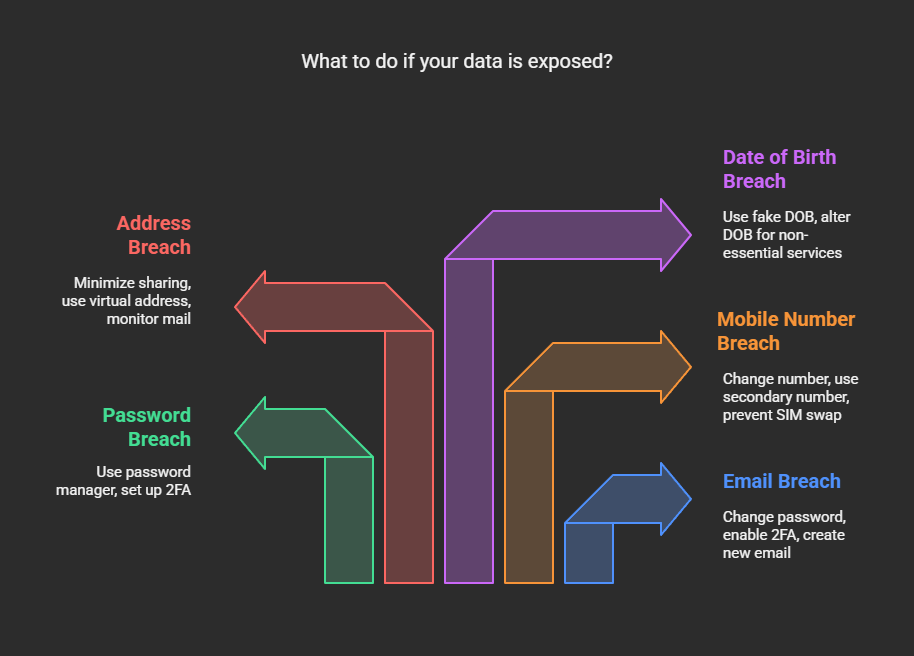
1. If Your Email Is Breached:
- Change the password immediately (Use a strong, unique password).
- Enable two-factor authentication (2FA) to add an extra layer of security.
- Stop using that email for important services (e.g., banking, government).
- Create a new email for critical services and migrate accounts over time.
2. If Your Password Is Breached:
- Never reuse old passwords across different accounts.
- Use a password manager like Bitwarden or 1Password to generate and store strong passwords.
- Set up 2FA on all accounts (preferably using an authenticator app instead of SMS).
3. If Your Mobile Number Is Breached:
- Change your number if possible, especially if it’s tied to banking or other sensitive services.
- Use a secondary number (Google Voice, MySudo, Burner apps) for sign-ups.
- Be cautious of SIM swap attacks (Contact your telecom provider to enable a SIM lock or port-out protection).
4. If Your Address Is Breached:
- Minimize sharing your home address online (Avoid using it for online shopping if possible).
- Use a virtual address for public services and business registrations.
- Monitor any suspicious mail or identity theft attempts.
5. If Your Date of Birth Is Breached:
- If a service does not require an accurate DOB, use a fake one.
- Consider slightly altering your DOB for non-essential services.
Proactive Measures to Reduce Future Exposure
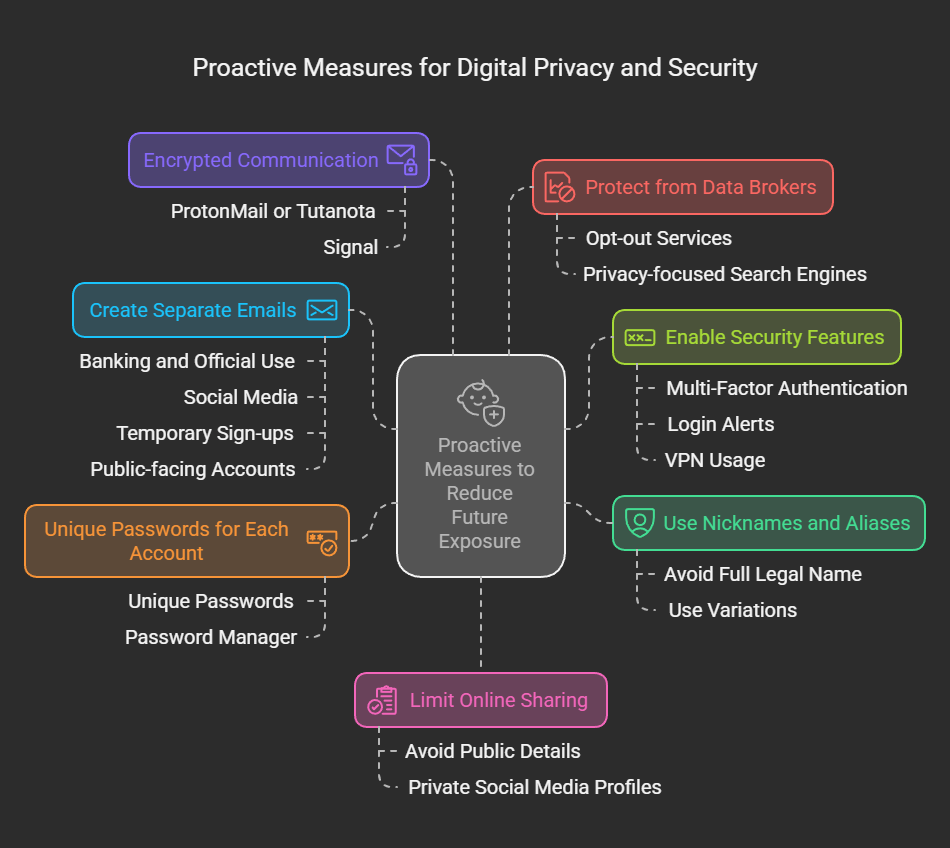
1. Use Nicknames and Aliases When Possible
- Avoid using your full legal name for non-government or financial services.
- Use variations of your name for different platforms.
2. Create a Separate Email for Each Service Category
- One for banking and official use.
- One for social media.
- One for temporary sign-ups.
- One for public-facing accounts.
3. Never Use One Password for Multiple Accounts
- Each account should have a unique password.
- Use a password manager to generate and store strong passwords.
4. Use Encrypted Communication for Sensitive Data
- Use ProtonMail or Tutanota instead of Gmail for sensitive emails.
- Use encrypted messaging apps like Signal instead of SMS.
5. Protect Your Identity from Data Brokers
- Opt out of data broker sites that collect and sell personal data (use services like DeleteMe or PrivacyDuck).
- Use privacy-focused search engines like DuckDuckGo.
6. Enable Security Features Everywhere
- Use Multi-Factor Authentication (MFA) on all important accounts.
- Enable login alerts on banking and email accounts.
- Use a VPN to hide your IP address and browsing activity.
7. Limit What You Share Online
- Do not post personal details publicly (avoid sharing your phone number, address, or workplace on social media).
- Set social media profiles to private where possible.
What If Your Identity Has Already Been Stolen?
If your information has been fully compromised (identity theft, financial fraud, etc.), follow these steps:
- Freeze your credit (in the U.S., contact Experian, Equifax, and TransUnion to prevent new accounts in your name).
- File a police report if your personal details were used for fraud.
- Notify your bank and secure financial accounts if sensitive data like SSN or bank details were leaked.
- Monitor your accounts regularly for any unauthorized activity.
- Use a fraud alert service like LifeLock or Norton Identity Protection.
Conclusion: Stay Vigilant in the Digital Age
Your data is valuable, and cybercriminals are always on the lookout for new victims. Being proactive about security, using privacy-focused services, and regularly checking for breaches can help you stay ahead of threats. By following best practices—like using aliases, encrypting communication, and securing your accounts—you can significantly reduce the chances of your personal data being misused.
In an era where privacy is constantly under attack, the best defense is knowledge and preparation. Start implementing these measures today to protect yourself from future breaches.
 Spyboy blog