
 Posted by
 Introduction: When a Voice Call Can’t Be Trusted Anymore
Picture this: you pick up a call from your bank manager. The voice is unmistakably his—calm, professional, even referencing details from your last account review. He warns you of fraudulent activity and instructs you to transfer your funds to a “safe” account immediately. You comply. Hours later, you discover that your money is gone—because the caller wasn’t your manager at all.
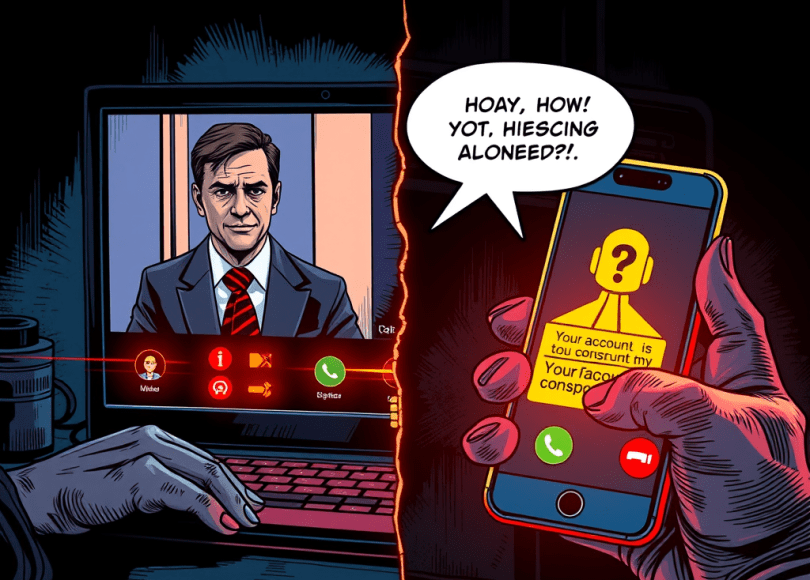
This is the terrifying reality of deepfake voice phishing (vishing). With the rise of AI-generated voices and synthetic video deepfakes, cybercriminals are no longer just hacking systems—they’re hacking human trust.
In Australia and around the globe, businesses and individuals are falling prey to these advanced scams. From multi-million-dollar bank thefts to corporate fraud carried out via fake Zoom calls, deepfake and vishing threats are becoming the fastest-growing form of cybercrime.
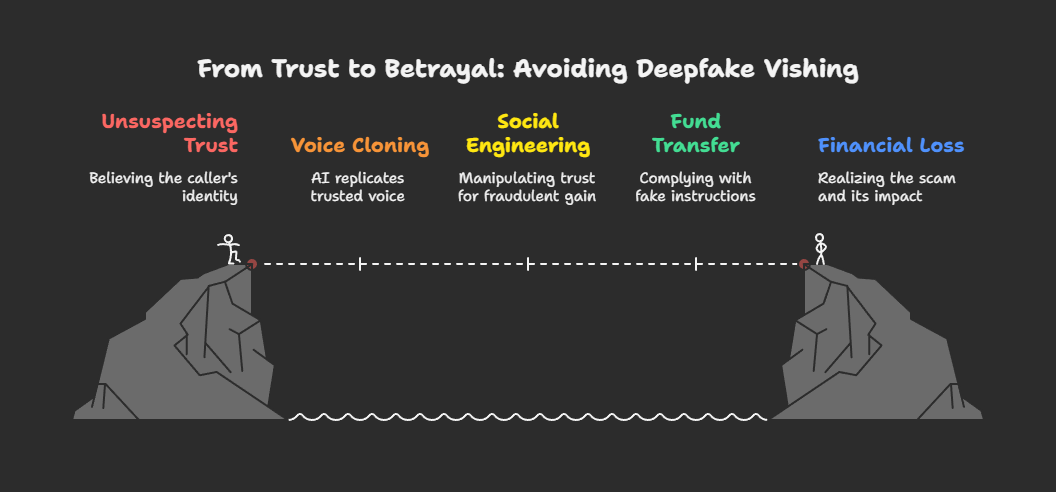
This article explores:
- What deepfake and vishing attacks are
- How hackers create and deploy them
- The platforms and tools they use
- Real-world case studies of major fraud incidents
- How easy (and cheap) it is to pull off such attacks
- Actionable steps to protect yourself and your business
Let’s dive into the world where you can no longer trust what you see—or hear.
What Are Deepfake & Vishing Attacks?
🔹 Deepfake Technology
Deepfakes use AI and machine learning algorithms (notably GANs—Generative Adversarial Networks) to manipulate or generate synthetic audio, video, or images that appear authentic.
- Deepfake video can replicate a person’s face and gestures.
- Deepfake voice can clone someone’s tone, accent, and speech patterns.
🔹 Vishing (Voice Phishing)
Vishing is the use of phone calls or voice messages to trick victims into revealing sensitive information. Traditionally, it relied on social engineering and caller ID spoofing. Today, paired with deepfake voice cloning, vishing has become far more convincing.
👉 Combined Threat: A scammer can now impersonate your CEO’s voice on a conference call and appear as them on video via a deepfake overlay.
How Hackers Pull Off Deepfake & Vishing Scams
Contrary to what many believe, pulling off a convincing deepfake isn’t restricted to elite hackers. Today, affordable AI tools and publicly available datasets make it disturbingly easy.
Step 1: Reconnaissance
Hackers gather voice samples, video footage, and personal details:
- Social media (Instagram, TikTok, YouTube)
- Company webinars and conference recordings
- Public speeches or interviews
Step 2: Voice Cloning
- Using AI voice cloning software, attackers feed short samples (as little as 30 seconds of audio).
- The AI model recreates the target’s pitch, tone, and speaking style.
Step 3: Video Manipulation
- Deepfake platforms use facial mapping to superimpose the target’s face onto another actor’s body.
- Real-time filters can be applied in Zoom, Teams, or Google Meet calls.
Step 4: Social Engineering Execution
- The attacker calls or video-conferences the victim, impersonating a trusted figure (bank manager, CEO, HR, etc.).
- They create urgency: “Funds must be transferred immediately,” “Confidential deal requires NDA,” etc.
Step 5: Financial Theft or Data Breach
- Victims willingly transfer money or share confidential credentials.
What Platforms and Tools Do Hackers Use?
While I won’t provide malicious tutorials, it’s important to know what platforms are commonly misused so businesses can prepare defenses.
Voice Deepfake Platforms Commonly Exploited
- Descript’s Overdub – Intended for content creators, but can be misused.
- Resemble.ai – High-quality AI voice cloning.
- iSpeech / Lyrebird (now acquired by Descript) – Easy voice replication.
- Open-source models (e.g., Coqui TTS, Vall-E, ElevenLabs leaked models) – Widely available on GitHub.
Video Deepfake Tools
- DeepFaceLab – Popular open-source deepfake creation software.
- FaceSwap – AI-based facial replacement.
- Deepfakes Web – Cloud-based platform for generating videos.
- Avatarify / Snap Camera Filters – Used for real-time deepfake overlays.
Social Engineering Platforms
- VoIP Services & Burner Numbers – For spoofed calls.
- Telegram & Dark Web Forums – For buying ready-made voice samples and datasets.
- Zoom / Microsoft Teams / Google Meet – For real-time deepfake impersonation during corporate calls.
Real-World Case Studies: Deepfake & Vishing Fraud
1. $35 Million Deepfake Bank Heist in UAE
- In 2020, cybercriminals used deepfake voice tech to impersonate a company director.
- They convinced a bank manager to transfer $35 million.
- The voice was so realistic that even colleagues didn’t notice.
2. $243,000 CEO Fraud in the UK
- A UK energy firm was tricked into wiring funds after an employee received a call from his “CEO.”
- The voice was AI-generated, complete with the German accent.
3. Australia’s Growing Deepfake Fraud Problem
- The Australian Competition and Consumer Commission (ACCC) reported that losses to scams hit $3.1 billion in 2022, with deepfake-enhanced vishing on the rise.
- Several cases involved fake bank representative calls directing victims to transfer funds to “safe accounts.”
4. Deepfake Job Interviews
- In the U.S., scammers used deepfakes to apply for remote jobs, particularly in IT roles with access to sensitive infrastructure.
How Easy (and Cheap) Is It to Launch a Deepfake Attack?
Surprisingly, very. Here’s a breakdown:
ComponentEffort/Cost for HackersAccessibility
Voice SamplesFree (YouTube, LinkedIn webinars)Easy
Voice Cloning Software$5–$30/month (or free open-source)Easy
Video Deepfake ToolsFree to $50/monthEasy
Social Engineering Setup$10 burner SIMs, VoIP appsEasy
Potential Payout$10,000 to millionsExtremely High
👉 In short: a few dollars and minimal technical skills can yield millions in stolen funds.
Why Deepfake Vishing Is So Effective
- Psychological Manipulation – People trust familiar voices and faces.
- Contextual Credibility – Hackers reference real company events.
- Urgency & Authority – “CEO says transfer now” is rarely questioned.
- Technology Gap – Most employees can’t detect a deepfake in real-time.
How to Stay Safe from Deepfake & Vishing Scams
🔐 For Individuals
- Verify Requests: Always confirm financial or sensitive requests via a secondary channel.
- Don’t Trust Caller ID: Numbers can be spoofed.
- Enable Multi-Factor Authentication (MFA): Even if you share your password, MFA can stop attackers.
- Be Suspicious of Urgency: If it feels rushed, it’s likely a scam.
🏢 For Businesses
- Implement Call-Back Policies – Any request for fund transfer must be verified by calling back via an official number.
- Employee Training – Update awareness programs to include deepfake and vishing recognition.
- AI-Powered Detection Tools – Deploy deepfake detection software (e.g., Reality Defender, Deepware).
- Zero-Trust Policies – Assume no request is genuine until verified.
- Restrict Public Data Exposure – Limit how much video/audio of executives is shared publicly.
The Future of Deepfake & Vishing Threats
Experts warn that deepfake vishing is only the beginning. Future threats include:
- Synthetic identity fraud using deepfake passports & IDs.
- Political manipulation with fake video speeches.
- AI-driven ransomware negotiations with cloned CEO voices.
But just as AI enables attackers, AI also empowers defenders. Deepfake detection algorithms, voice authentication systems, and real-time fraud detection tools are improving rapidly.
Conclusion: Trust, But Verify
We’ve entered an era where you can’t always trust the voice on the other end of the call—or even the face on your Zoom screen. Deepfake and vishing scams are not only real, but alarmingly easy and cheap to execute.
The good news? Awareness and proactive defenses can drastically reduce risk. By combining human vigilance, strict verification policies, and AI-powered security tools, individuals and organizations can stay ahead of scammers.
👉 Action Step: Start today. Train your teams, adopt call-back policies, and treat any urgent financial request—no matter how convincing—with skepticism.
FAQs on Deepfake & Vishing Threats
1. What is vishing in cybersecurity?
Vishing is voice phishing—scams carried out over phone calls or voice messages to trick victims into revealing sensitive information or transferring money.
2. How do hackers use deepfake technology for scams?
Hackers use AI to clone voices and faces from publicly available videos. They then impersonate trusted figures (like CEOs or bank managers) to manipulate victims into taking harmful actions.
3. How common are deepfake vishing attacks?
Incidents are rapidly increasing. Reports from the FBI and ACCC highlight a surge in deepfake-enabled fraud, with billions lost globally in recent years.
4. Can deepfake voices be detected?
Detection tools exist (e.g., Reality Defender), but real-time detection remains difficult. Verification through secondary channels is still the most reliable defense.
5. How can businesses protect themselves from deepfake scams?
- Train employees on deepfake risks
- Implement call-back and multi-verification policies
- Use AI-powered fraud detection tools
- Restrict executives’ public video/audio exposure
 Spyboy blog