

 Posted by
 Phishing remains one of the most prevalent and effective methods used by cybercriminals to steal sensitive information, compromise accounts, and execute malicious activities. Understanding the techniques, recognizing famous cases, and adopting preventive measures can significantly enhance individual and organizational defenses.
What is Phishing?
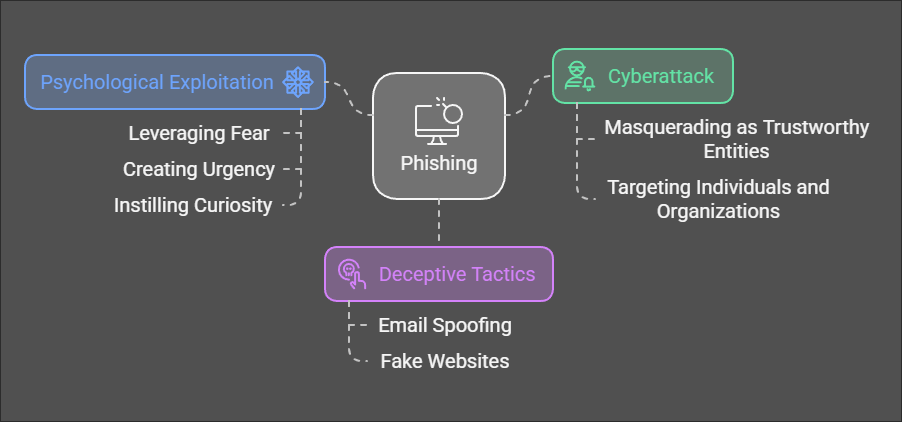
Phishing is a type of cyberattack where attackers masquerade as trustworthy entities to deceive victims into revealing sensitive information, such as login credentials, financial details, or personal data. These attacks exploit human psychology, leveraging fear, curiosity, or urgency to prompt victims to act without scrutiny.
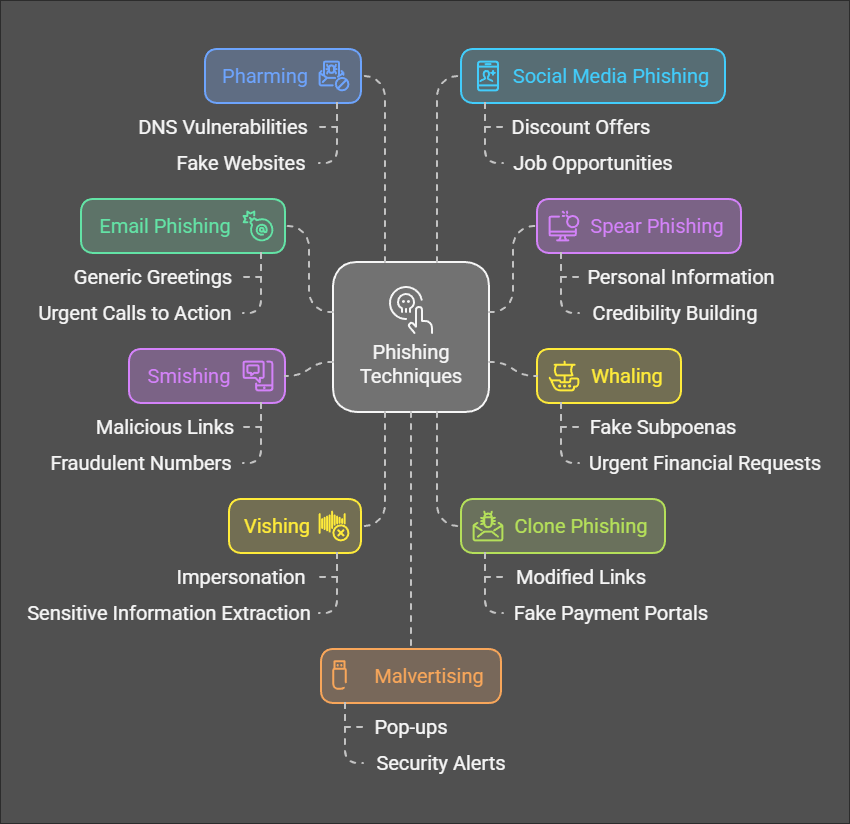
Top Phishing Techniques
- Email Phishing:
- Description: The most common form of phishing involves fraudulent emails that appear to come from legitimate sources like banks, service providers, or colleagues.
- Indicators: Generic greetings, grammatical errors, urgent calls to action, and suspicious links.
- Spear Phishing:
- Description: A targeted attack tailored to a specific individual or organization, often using personal information to build credibility.
- Example: An email seemingly from a CEO to an employee requesting confidential company data.
- Whaling:
- Description: A type of spear phishing aimed at high-profile targets such as executives or government officials.
- Tactics: Often uses fake subpoenas, business email compromise (BEC), or urgent financial requests.
- Smishing (SMS Phishing):
- Description: Phishing through text messages, often containing malicious links or prompts to call fraudulent numbers.
- Example: Messages claiming you’ve won a prize or need to resolve an issue with your bank account.
- Vishing (Voice Phishing):
- Description: Phishing via phone calls, where attackers impersonate officials or customer support representatives to extract sensitive information.
- Example: A call claiming to be from the IRS demanding immediate payment of back taxes.
- Clone Phishing:
- Description: Attackers duplicate a legitimate email and modify its content, replacing links or attachments with malicious ones.
- Use Case: Resending an invoice email with a link to a fake payment portal.
- Pharming:
- Description: Redirecting users from legitimate websites to fake ones by exploiting DNS vulnerabilities.
- Outcome: Victims unknowingly enter sensitive data into a malicious website.
- Social Media Phishing:
- Description: Using fake social media profiles or direct messages to trick users into revealing personal information.
- Tactics: Offers of discounts, job opportunities, or fake friend requests.
- Malvertising (Malicious Advertising):
- Description: Involves embedding malicious ads on legitimate websites that redirect users to phishing sites.
- Delivery: Pop-ups claiming software updates or security alerts.
- Man-in-the-Middle (MitM) Phishing:
- Description: Attackers intercept communications between users and legitimate websites, often on public Wi-Fi, to steal sensitive data.
- Indicators: Unexpected SSL certificate warnings or redirects.
Famous Phishing Cases
- The Sony Pictures Hack (2014):
- Attackers used spear phishing emails to gain access to Sony’s network, leading to the leak of sensitive company data and unreleased films.
- Google and Facebook Fraud (2013-2015):
- A Lithuanian hacker tricked both companies into wiring over $100 million by sending fraudulent invoices via email.
- The Democratic National Committee (DNC) Hack (2016):
- Phishing emails targeting DNC staff led to the compromise of email accounts, impacting the U.S. presidential election.
- Target Data Breach (2013):
- Attackers used phishing to compromise a third-party vendor’s credentials, leading to the theft of credit card data from 40 million customers.
- The Crelan Bank Scam (2016):
- Belgian bank Crelan lost over $75 million due to a whaling attack targeting senior executives.
How to Avoid Phishing Attacks
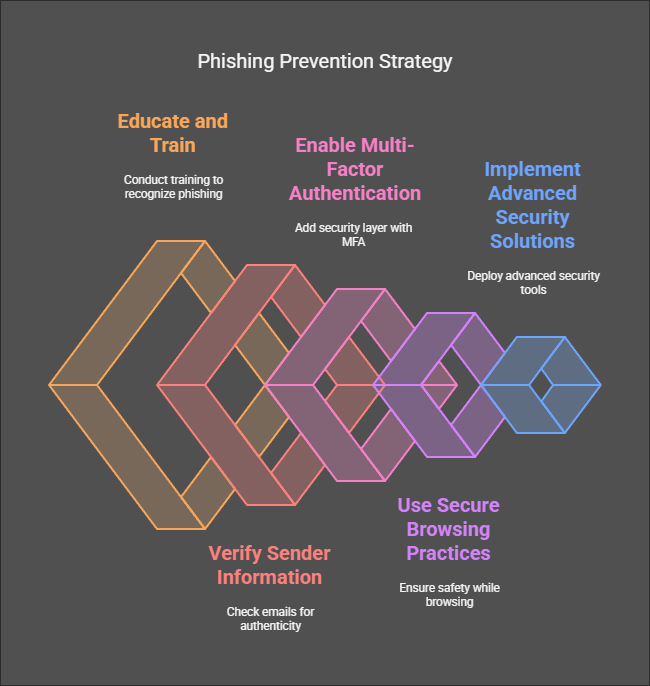
- Educate and Train:
- Conduct regular training sessions to help employees and individuals recognize phishing attempts.
- Use simulated phishing campaigns to test awareness.
- Verify Sender Information:
- Check email addresses carefully for slight misspellings or discrepancies.
- Avoid clicking on links or downloading attachments from unknown sources.
- Enable Multi-Factor Authentication (MFA):
- Even if credentials are compromised, MFA adds an additional layer of security.
- Use Secure Browsing Practices:
- Verify URLs before entering sensitive information.
- Look for HTTPS and legitimate certificates on websites.
- Implement Advanced Security Solutions:
- Deploy email filters, anti-malware tools, and firewalls.
- Use endpoint detection and response (EDR) tools to identify and mitigate threats.
- Be Wary of Urgent Requests:
- Scrutinize emails or messages demanding immediate action or sensitive information.
- Contact the sender directly through official channels to verify.
- Avoid Public Wi-Fi for Sensitive Transactions:
- Use a virtual private network (VPN) to secure connections on public networks.
- Regularly Update Software:
- Keep operating systems, browsers, and antivirus programs up to date to patch vulnerabilities.
- Report Suspicious Activities:
- Notify IT teams or relevant authorities about suspected phishing attempts.
Conclusion
Phishing attacks are a persistent and evolving threat in the digital landscape. By understanding the tactics used by cybercriminals, analyzing notable cases, and adopting robust preventive measures, individuals and organizations can significantly reduce their vulnerability to these attacks. Vigilance, education, and the use of advanced security technologies are essential to staying one step ahead of attackers.
 Spyboy blog