

 Posted by
 Imagine receiving a call from your bank, a government agency, or even a family member—only to later realize it was a scammer pretending to be them. Phone number spoofing is a serious cyber threat that allows attackers to manipulate caller ID information to trick victims. This technique is widely used by scammers, hackers, and fraudsters to impersonate trusted contacts, steal personal information, or conduct fraudulent activities.
In this article, we will explore how phone number spoofing works, what tools are used, how scammers get away with it, how to detect spoofed numbers, and how to protect yourself from falling victim to these deceptive practices.
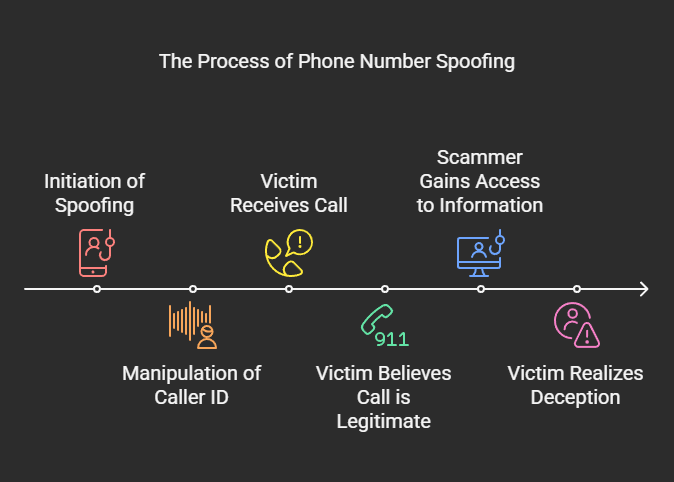
How Phone Number Spoofing Works
Phone number spoofing is the process of falsifying caller ID information to make it appear as though a call or text message is coming from a different number than its true origin. Scammers and hackers manipulate phone networks to mask their real identity, making it easier to gain a victim’s trust.
Technical Methods of Spoofing:
- VoIP (Voice over IP) Services: Many VoIP services allow users to customize the number that appears on caller ID. Attackers exploit this feature to make their calls look legitimate.
- SIP (Session Initiation Protocol) Trunking: SIP technology is used by businesses to manage calls over the internet, but malicious actors can abuse it to spoof numbers.
- Third-Party Spoofing Services: Websites and apps provide caller ID spoofing services, allowing anyone to input a fake number for a small fee.
- SIM Swapping: Hackers can transfer a victim’s phone number to another SIM card by tricking mobile carriers, allowing them to make calls as the victim.
- SS7 Exploits: The Signaling System No. 7 (SS7) is a critical part of the telecom infrastructure that can be exploited to intercept and spoof calls.
- PBX (Private Branch Exchange) Systems: Some scammers use business-grade telephony systems to manipulate caller ID settings.
What Software and Tools Are Used for Spoofing?
There are various tools and platforms—some legal, some questionable—that enable phone number spoofing:
Common Spoofing Tools:
- SpoofCard – A paid service that allows users to spoof caller ID.
- SpoofTel – A VoIP-based service that lets users change their outgoing phone number.
- Burner Apps – Apps like Burner and Hushed provide temporary numbers that can be used for anonymity.
- PBX Systems – Business phone systems like Asterisk allow custom caller ID settings.
- Custom VoIP Scripts – Hackers can set up their own VoIP systems with open-source software like FreePBX or Asterisk.
- SS7 Attack Tools – Exploits used by sophisticated hackers to manipulate telecom networks.
While some of these tools have legitimate uses (e.g., protecting privacy or business communications), they are frequently abused by scammers.
Why Is Phone Number Spoofing Allowed?
Phone number spoofing exists because:
- Legitimate Uses Exist: Businesses use it for customer service, doctors may call patients from personal phones while displaying an office number, and journalists use it for privacy.
- Lack of Global Regulations: Different countries have varying laws, and enforcement is difficult.
- Telecom Infrastructure Weaknesses: The SS7 protocol is outdated and lacks modern security controls.
- Anonymity in VoIP Services: Many VoIP providers do not verify users, making it easy for scammers to register fake numbers.
While some laws (such as the U.S. Truth in Caller ID Act) prohibit malicious spoofing, enforcement remains challenging.
How to Detect a Spoofed Phone Number
While it’s difficult to detect spoofed numbers in real time, there are ways to identify suspicious calls:
Signs of Spoofing:
- Mismatched Caller ID – A call from a known number but with an unfamiliar voice or request.
- Caller Demands Urgent Action – Scammers often create a sense of urgency.
- Inconsistent Information – If the caller provides information that doesn’t match official records.
- No Callback Possible – Calling the number back results in a disconnected line or the real person denying making the call.
- Unusual Country Codes – International scammers sometimes spoof local numbers.
Tools to Verify Spoofing:
- Reverse Phone Lookup – Check the number online to see if it has been reported as fraudulent.
- Carrier Verification – Some telecom providers offer verification services.
- Call Authentication Protocols (STIR/SHAKEN) – These are emerging technologies that help detect spoofed calls.
How to Protect Yourself from Spoofed Calls
Preventing spoofed calls entirely is difficult, but you can reduce your risk:
1. Use Call Authentication Features
- Enable STIR/SHAKEN call verification if your carrier supports it.
- Use call-blocking apps like Hiya, Truecaller, or RoboKiller.
2. Be Skeptical of Unexpected Calls
- Never give out sensitive information (SSN, bank details, OTPs) over the phone.
- If a call claims to be from a business, hang up and call the official number instead.
3. Use Multi-Factor Authentication (MFA)
- Protect accounts with MFA to prevent identity theft in case of SIM swapping.
4. Report Spoofed Calls
- In the U.S., report spoofing to the FCC (Federal Communications Commission) or the FTC (Federal Trade Commission).
- In other countries, report to relevant telecom authorities.
5. Educate Friends and Family
- Warn others about spoofing scams, especially elderly family members who are often targeted.
The Risks of Phone Number Spoofing
Phone number spoofing poses serious risks:
- Identity Theft – Attackers can impersonate banks, law enforcement, or government agencies to steal sensitive data.
- Financial Fraud – Victims may transfer money to scammers believing they are dealing with a legitimate institution.
- Blackmail and Harassment – Scammers can use spoofing to impersonate victims and damage reputations.
- SIM Swapping Attacks – Can lead to hijacked social media and financial accounts.
Businesses and individuals alike must stay vigilant, as spoofing tactics continue to evolve.
Conclusion
Phone number spoofing is a dangerous tool in the hands of scammers and hackers, allowing them to impersonate trusted sources and deceive unsuspecting victims. While telecom companies are working on solutions like STIR/SHAKEN, the responsibility also falls on individuals to recognize and avoid spoofed calls.
By staying informed, using call authentication tools, and being cautious with unexpected phone calls, you can reduce the risk of falling victim to spoofing scams. Awareness is the first line of defense—spread the word and help others stay safe in an age where trust in caller ID is no longer guaranteed.
 Spyboy blog
One comment