
 Posted by
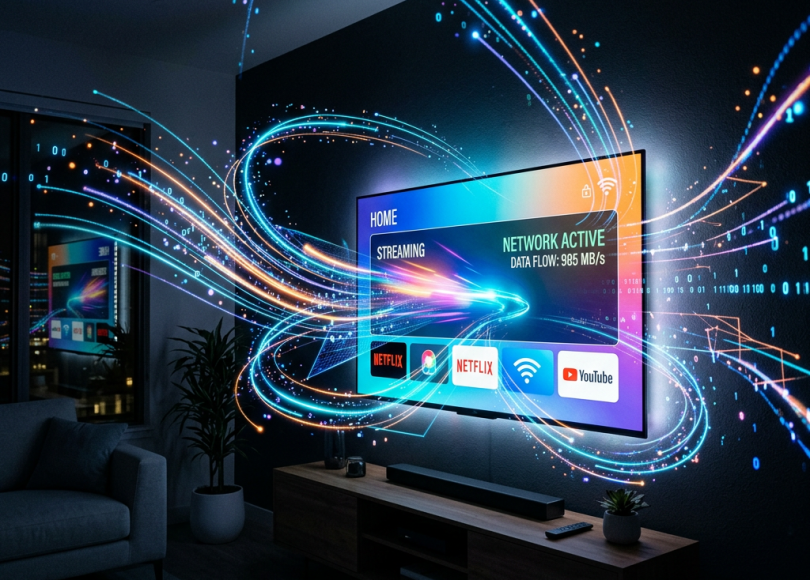
 Smart TVs are supposed to make life easier.
You sit down.
Open Netflix.
Watch YouTube.
Stream movies.
Use voice commands.
Simple.
But what most people don’t realize is this:
Modern smart TVs can collect an enormous amount of data about you.
Including:
- What you watch
- When you watch
- Which apps you use
- Your search history
- Voice commands
- Viewing habits
- Device connections
- Sometimes even external HDMI activity
And in many cases…
Users have no idea it’s happening.
Your TV is no longer just a screen.
It’s a connected data collection device sitting in your living room.
In this deep dive, we’ll uncover:
- 📺 How smart TVs actually track users
- 🕵️ What ACR tracking is
- 🎙 Can TVs really listen through microphones?
- 🌐 How advertisers use TV viewing data
- ⚠️ Hidden privacy risks most people ignore
- 🔐 How to reduce smart TV spying
- 🤖 Why modern TVs are becoming smarter — and more invasive
Because today…
Your TV may know more about your habits than you think.
Smart TVs Are Basically Computers Now
Modern smart TVs include:
- Operating systems
- Internet connectivity
- App stores
- Voice assistants
- Advertising systems
- Analytics platforms
Many TVs constantly communicate with servers online.
That’s how they provide:
- Recommendations
- Personalized ads
- Streaming features
- Voice functionality
But those same systems also enable tracking.
What Is Smart TV Tracking?
Smart TVs often collect:
- Viewing history
- App usage
- Search activity
- Device identifiers
- Location information
- Network details
This data may be used for:
- Personalized recommendations
- Advertising
- Analytics
- Audience measurement
And sometimes shared with:
- Advertising partners
- Analytics companies
- Third-party services
The Most Controversial Feature: ACR Tracking
One of the most controversial smart TV technologies is:
ACR
(Automatic Content Recognition)
ACR allows TVs to analyze what content is being watched.
This can include:
- Streaming apps
- Live TV
- Sometimes external HDMI devices
The TV creates tiny snapshots or signatures of content and compares them against huge databases.
This helps companies understand:
- What people watch
- Viewing patterns
- Advertising effectiveness
Many users never realize this feature exists.
Why Companies Want Your TV Data
Because viewing data is extremely valuable.
Advertisers want to know:
- What you watch
- When you watch
- Which ads influence you
- Which products interest you
This helps build detailed behavioral profiles.
Modern advertising isn’t just:
“Show random ads.”
It’s:
Hyper-targeted behavioral prediction.
Can Smart TVs Listen Through Microphones?
Some smart TVs include:
- Built-in microphones
- Voice assistants
- Voice search systems
Examples include integration with:
- Google Assistant
- Amazon Alexa
These systems activate microphones when listening for commands.
Manufacturers say:
- Audio is processed for voice features
- Wake words trigger recording
- Controls exist to disable microphones
But privacy concerns remain because:
- Many users forget microphones exist
- Voice systems sometimes activate accidentally
- Some data may be processed remotely
The “My TV Is Listening” Fear
People often notice:
- Talking about products
- Then seeing related ads later
This creates suspicion that TVs are “listening.”
In reality, much targeted advertising often comes from:
- Browsing behavior
- Cross-device tracking
- Shared accounts
- AI profiling
But the existence of microphones understandably increases concern.
Smart TVs Can Track More Than Streaming Apps
Some smart TVs may also collect:
- Device connection info
- HDMI activity
- App interaction data
- Viewing duration
- Navigation behavior
Even menu activity can generate analytics.
Your TV may know:
- When you wake up
- How long you watch
- Which platforms you prefer
- Which content keeps attention
That’s extremely valuable data.
Cross-Device Tracking: Your TV and Phone Are Connected
Advertisers increasingly connect:
- Smart TVs
- Smartphones
- Tablets
- Laptops
Using:
- Shared WiFi
- Device IDs
- Login accounts
- IP correlation
This allows companies to:
- Sync advertising
- Measure ad effectiveness
- Build unified profiles
Ever watch something on TV…
then suddenly see related ads on your phone?
This is often why.
Real-World Smart TV Privacy Controversies
Several TV manufacturers faced backlash over:
- Aggressive data collection
- Tracking without clear consent
- Difficult privacy settings
- Hidden analytics features
Some older smart TVs were even criticized for collecting extensive viewing data by default.
These controversies increased awareness around smart TV privacy dramatically.
Free Streaming Platforms and Ads
Many smart TV ecosystems push:
- Free ad-supported content
- Personalized recommendations
- Behavioral advertising
The cheaper the platform…
Often the more valuable your data becomes.
Because in many ecosystems:
You are part of the product.
Why Smart TVs Rarely Get Security Updates
Another huge issue:
Security updates.
Many TVs:
- Stop receiving updates quickly
- Run outdated software
- Contain vulnerable apps
This creates cybersecurity risks beyond privacy.
Compromised smart devices can potentially become:
- Botnet participants
- Malware targets
- Entry points into home networks
Though large-scale attacks remain less common for average users.
Smart TVs and Voice Data
Voice assistants may process:
- Voice searches
- Commands
- Interaction patterns
Some systems send data to cloud services for:
- Speech recognition
- AI processing
- Feature improvement
That’s why reviewing privacy settings matters.
The Hidden Risk Most People Ignore: Default Settings
Many TVs enable:
- Data sharing
- Viewing analytics
- Personalized advertising
By default.
Most users:
- Skip setup screens
- Accept all prompts
- Never review privacy menus
That’s exactly what companies rely on.
How to Reduce Smart TV Tracking
Now the important part.
🔐 1. Disable ACR Tracking
Look for settings like:
- Viewing Information Services
- Content Recognition
- Interest-Based Ads
- Smart Interactivity
Different brands use different names.
🎙 2. Disable Voice Features If Unused
Turn off:
- Microphones
- Voice wake features
- Assistant integrations
If you don’t need them.
🌐 3. Limit Internet Connectivity
Some users:
- Keep TVs offline
- Use external streaming devices instead
This dramatically reduces tracking.
🛡 4. Review Privacy Settings Carefully
Most TVs hide privacy controls deep in menus.
Review:
- Data sharing
- Advertising IDs
- Diagnostics
- Personalization
📡 5. Keep TV Firmware Updated
Updates may patch:
- Security flaws
- Vulnerabilities
- Privacy issues
🔌 6. Disconnect Unused Smart Features
Disable:
- Bluetooth
- Remote access
- Device discovery
If unnecessary.
Comparison: Standard Smart TV Setup vs Privacy-Focused Setup
| Default Setup | Privacy-Focused Setup |
|---|---|
| Personalized ads enabled | Ads minimized |
| ACR active | ACR disabled |
| Voice assistant enabled | Microphone disabled |
| Extensive analytics | Reduced data sharing |
| Constant connectivity | Limited tracking |
The Bigger Problem: Everything Is Becoming a Data Collection Device
It’s not just TVs anymore.
Modern homes include:
- Smart speakers
- Smart refrigerators
- Smart cameras
- Smart lights
- Smart thermostats
All generating:
Behavioral data.
The “smart home” ecosystem increasingly depends on:
- Cloud connectivity
- Analytics
- AI profiling
- Data monetization
Final Thoughts: Smart TVs Are Convenient — But Convenience Has a Cost
Smart TVs provide:
- Incredible streaming access
- Personalized experiences
- Voice controls
- Smart recommendations
But they also introduce:
- Tracking
- Profiling
- Privacy concerns
- Security risks
Most users never realize how much information their TVs collect.
Because unlike phones or laptops…
People rarely think of televisions as surveillance-capable devices.
But modern smart TVs are essentially internet-connected computers with analytics systems built in.
And they’re quietly watching more than just your favorite shows.
Frequently Asked Questions (FAQ)
❓ Can smart TVs really spy on you?
Smart TVs can collect viewing habits, app usage, analytics data, and voice interactions depending on settings and features enabled.
❓ What is ACR tracking on TVs?
ACR (Automatic Content Recognition) is a technology used by some smart TVs to identify and analyze viewed content for analytics and advertising purposes.
❓ Can smart TVs listen through microphones?
Some smart TVs contain microphones for voice assistants and voice commands. Users can often disable these features.
❓ Why do I see ads related to what I watch on TV?
Advertising companies may connect smart TV viewing data with other devices using cross-device tracking and shared networks.
❓ How do I stop my TV from tracking me?
- Disable ACR
- Turn off personalized ads
- Disable microphones
- Review privacy settings
- Limit internet connectivity
❓ Are smart TVs a cybersecurity risk?
Like any internet-connected device, outdated smart TVs may contain vulnerabilities if not updated properly.
Final Call to Action
Right now:
- Open your TV privacy settings
- Disable unnecessary tracking features
- Review microphone permissions
- Turn off ACR if available
- Share this article with someone who owns a smart TV
Because your television today…
May be collecting far more than entertainment preferences.
Discover more from Spyboy blog
Subscribe to get the latest posts sent to your email.
