
 Posted by
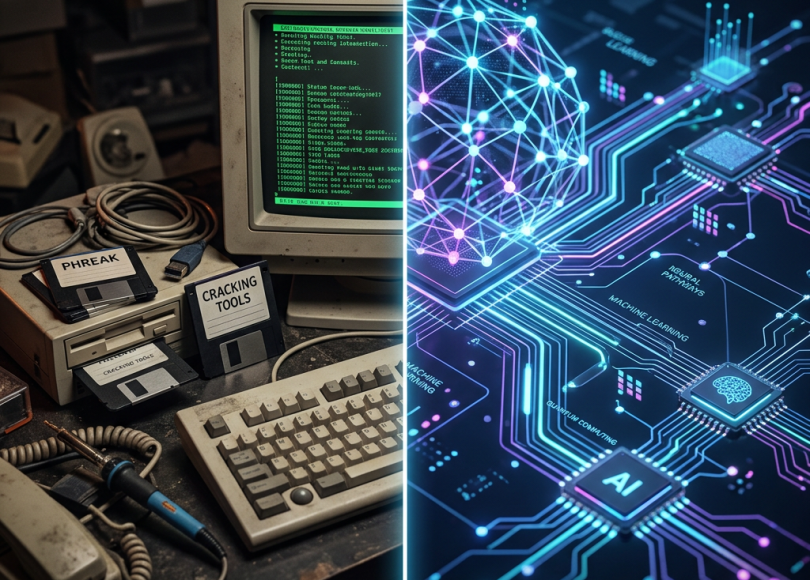
 A few years ago, cyberattacks required:
- Technical skill
- Coding knowledge
- Specialized tools
- Patience
Attackers had to:
- Write phishing emails manually
- Create fake websites
- Research victims
- Build malware
Now?
AI is changing everything.
Today attackers can use AI to:
- Generate realistic phishing emails
- Clone writing styles
- Create fake voices
- Build convincing scams
- Translate attacks instantly
- Automate social engineering
And the frightening part:
Attackers no longer need to be experts.
Because AI dramatically lowers the barrier.
In this deep dive, we’ll uncover:
- 🤖 How AI is changing cybercrime
- 🎭 Why scams are becoming more convincing
- 🕵️ Real examples of AI-assisted attacks
- ⚠️ What attackers can automate now
- 🔐 Why humans remain the biggest target
- 🛡 How to defend yourself in the AI era
Because today…
The most powerful hacking tool might not be code.
It might be intelligence.
Cybercrime Used To Be Harder
Years ago attackers often struggled with:
- Grammar mistakes
- Poor language skills
- Obvious phishing attempts
- Technical barriers
Scams looked suspicious.
Examples:
Dear customer kindly verify account urgently.
People spotted mistakes.
That protected many victims.
AI changed that.
Phishing Emails Became Smarter
AI can now generate:
- Cleaner language
- Personalized messages
- Better formatting
- Multiple language versions
Attackers increasingly create:
Messages that feel:
Professional.
Natural.
Human.
That makes phishing harder to detect.
AI Can Personalize Scams At Scale
Traditional scams often targeted:
Thousands of people with identical messages.
AI enables:
Dynamic personalization.
Examples:
Hi John, saw your recent project update…
Or:
We noticed activity involving your recent purchase…
Small details increase trust dramatically.
The Rise of AI Voice Cloning
Cybercriminals increasingly experiment with:
- Voice cloning
- Audio impersonation
- Fake emergency calls
Victims receive:
Calls that sound like:
- Family
- Friends
- Employers
People instinctively trust familiar voices.
That creates opportunities.
Deepfakes Changed Social Engineering
We already discussed deepfake risks.
But AI video generation continues improving rapidly.
Potential abuse areas include:
- Fake meetings
- Impersonation
- Fraud attempts
- Identity manipulation
Humans evolved to trust:
Faces and voices.
AI targets exactly that.
AI Helps Build Fake Websites Faster
Years ago:
Creating phishing pages required effort.
Today AI assists with:
- Writing code
- Copy generation
- Design ideas
- Rapid content creation
That speeds up scam development.
Another Problem: Language Barriers Disappeared
Cybercriminals once struggled with:
International campaigns.
AI translation now enables:
- Multiple languages
- Localized messaging
- Better grammar
This increases global reach dramatically.
Why Humans Remain The Main Target
AI doesn’t magically hack computers.
Attackers still usually target:
Humans.
Because convincing someone to:
- Click
- Download
- Share
- Trust
Remains extremely effective.
Technology changes.
Psychology stays surprisingly consistent.
AI Can Mimic Writing Styles
Imagine attackers collecting:
- Public posts
- Emails
- Social media content
AI may imitate:
- Tone
- Writing habits
- Communication style
Personal familiarity increases trust.
AI Is Also Helping Defenders
Important note:
AI isn’t only helping attackers.
Security teams use AI for:
- Threat detection
- Fraud analysis
- Malware classification
- Security automation
This creates:
An ongoing arms race.
Why Small Scams May Become Massive
AI improves:
Speed.
Scale.
Automation.
One attacker may now create:
- Thousands of customized messages
- Multiple campaigns
- Automated responses
Cybercrime efficiency changes dramatically.
Another Hidden Risk: AI Chat Manipulation
People increasingly trust AI systems.
Attackers may exploit:
- Fake bots
- Impersonation
- AI-generated support scams
Future attacks may increasingly blend:
Human trust + AI realism.
The Psychology Behind AI Success
Humans naturally trust:
- Familiarity
- Personalization
- Authority
- Urgency
AI amplifies all four.
Which explains why scams may become more effective.
Warning Signs AI-Assisted Scams May Exist
🚩 Unusual urgency
Pressure matters.
🚩 Emotional manipulation
Scammers create panic.
🚩 Requests involving money
Always verify.
🚩 Unexpected voice/video messages
Trust independently.
🚩 Communication feels oddly perfect
Extreme polish deserves caution.
How To Protect Yourself In The AI Era
Now the important part.
🔐 1. Verify Through Multiple Channels
Never trust one communication source alone.
🛡 2. Slow Down
AI scams often rely on urgency.
🌐 3. Question Unexpected Messages
Even realistic messages deserve scrutiny.
🚫 4. Don’t Trust Familiarity Alone
Voices and faces can be manipulated.
📱 5. Warn Family Members
Especially older relatives.
🔍 6. Stay Informed
Awareness increasingly matters.
Comparison: Traditional Scams vs AI-Assisted Scams
| Traditional | AI-Assisted |
|---|---|
| Generic | Personalized |
| Obvious errors | Natural language |
| Limited scale | Massive automation |
| Easier detection | Greater realism |
| Human effort | AI-assisted generation |
The Bigger Problem: AI Democratized Sophisticated Deception
Years ago:
Some attacks required:
Expertise.
Today:
AI increasingly helps:
- Beginners
- Scammers
- Fraudsters
Technology lowered barriers dramatically.
Final Thoughts: The Future Cyber Threat May Sound Human
Cybersecurity discussions used to focus on:
- Malware
- Passwords
- Viruses
Increasingly the focus becomes:
Trust.
Because AI changes how humans evaluate reality.
And in many cases…
The next attack may not look technical at all.
It may simply look:
Convincingly human.
Frequently Asked Questions (FAQ)
❓ Are hackers really using AI?
Yes. AI increasingly assists phishing, impersonation, automation, and scam development.
❓ Can AI create phishing emails?
AI can generate realistic and personalized content.
❓ Are AI scams increasing?
AI-assisted fraud and impersonation concerns continue growing.
❓ Can AI clone voices?
Modern tools can generate highly realistic synthetic voices.
❓ Is AI only helping attackers?
No. Security teams also use AI for defense and threat analysis.
❓ What is the biggest AI cybersecurity risk?
Social engineering and trust manipulation remain major concerns.
Final Call to Action
Right now:
- Verify unexpected messages
- Warn family members about AI scams
- Slow down before acting
- Stop assuming realistic means legitimate
- Share this article with someone who thinks AI only creates cool images
Because in the AI era…
The hardest thing to protect may no longer be devices.
It may be trust itself.
Discover more from Spyboy blog
Subscribe to get the latest posts sent to your email.
