 Posted by
 In November 2014, employees at Sony Pictures Entertainment arrived at work expecting a normal day.
Instead…
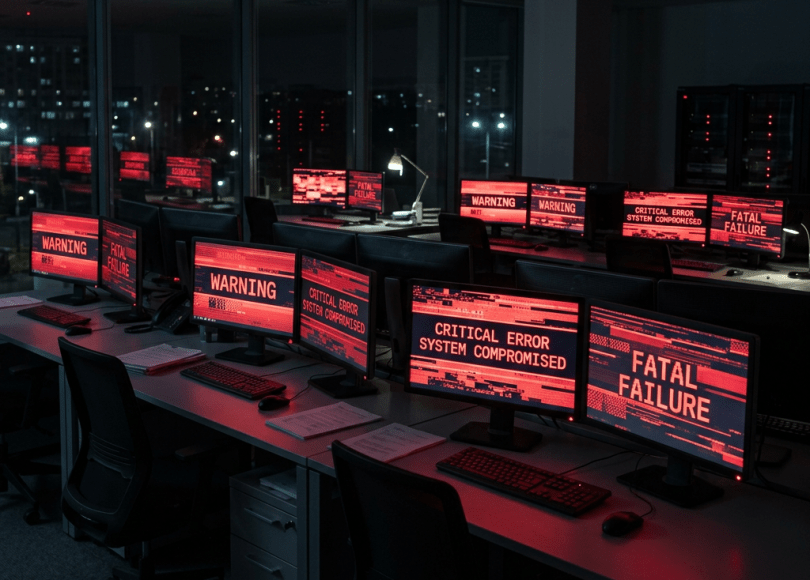
Their computer screens displayed a disturbing message.
Files had disappeared.
Systems stopped responding.
Internal networks were crippled.
And alongside the disruption was a warning from a group calling itself the Guardians of Peace (GOP).
At first, many believed it was another corporate cyberattack.
A few stolen files.
Maybe some financial data.
Then the leaks started.
And they didn’t stop.
Confidential emails.
Unreleased movies.
Executive conversations.
Employee information.
Business contracts.
Private communications.
Over the following weeks, one of Hollywood’s biggest studios found itself at the center of one of the most embarrassing cybersecurity incidents ever made public.
The breach wasn’t just about stolen data.
It became an international political crisis.
A Movie Nobody Expected to Start a Global Controversy
Around the same time, Sony Pictures was preparing to release The Interview, a comedy depicting a fictional assassination plot involving North Korean leader Kim Jong Un.
The film attracted international attention long before its release.
Following the cyberattack, speculation quickly grew that the incident might be connected to the movie.
The situation rapidly escalated beyond a typical corporate data breach.
The Screens Went Black
Employees reportedly found their computers displaying a threatening image instead of the normal login screen.
Soon it became clear that this wasn’t simply ransomware.
Large amounts of company data had been copied and removed before destructive malware damaged internal systems.
It was both:
- A data breach.
- A destructive cyberattack.
That combination made recovery especially difficult.
Then Came the Email Leaks
One of the most damaging aspects of the incident wasn’t technical.
It was human.
Thousands of internal emails became public.
Executives.
Producers.
Employees.
Business partners.
Private conversations suddenly became global headlines.
The incident reminded organizations everywhere that email archives often contain years of sensitive information.
More Than Just Emails
The attackers reportedly obtained:
- Employee records
- Internal documents
- Financial information
- Contracts
- Unreleased films
- Strategic business plans
The breadth of the breach shocked both the entertainment industry and the cybersecurity community.
When Cybersecurity Became International Politics
The attack soon moved beyond the technology world.
The Federal Bureau of Investigation publicly attributed the attack to actors associated with North Korea.
North Korea denied responsibility.
The attribution became the subject of extensive international discussion and analysis.
Regardless of where readers stand on the attribution, the incident demonstrated that cyberattacks can influence diplomacy, politics, and international relations.
The Theater Problem
After threats referencing theaters were circulated, several major theater chains chose not to screen The Interview.
Sony initially canceled the planned wide theatrical release before later making the film available through other distribution channels.
For many observers, it raised an unprecedented question:
Could a cyberattack influence freedom of expression?
The Cost Extended Far Beyond Money
Most people think cyberattacks cause:
- Financial losses.
- Operational disruption.
The Sony attack caused those too.
But it also damaged:
- Reputation.
- Employee morale.
- Business relationships.
- Public trust.
Sometimes the hardest thing to recover isn’t the data.
It’s confidence.
Why This Attack Changed Corporate Security
After Sony, companies began paying much closer attention to:
- Network segmentation.
- Data encryption.
- Employee awareness.
- Backup strategies.
- Incident response planning.
Executives realized cybersecurity wasn’t only an IT responsibility.
It had become a boardroom issue.
The Human Side of Data Breaches
One overlooked lesson from the Sony incident is this:
Behind every leaked file…
There are people.
Employees had personal information exposed.
Private conversations became public.
Professionals suddenly found years of communications being analyzed by the media.
Cybersecurity isn’t just about protecting systems.
It’s about protecting people.
Five Lessons From the Sony Hack
🎬 Entertainment companies are major cyber targets.
Intellectual property has significant value.
📧 Email archives deserve strong protection.
Old messages often contain sensitive information.
🔐 Backups are only one part of resilience.
Organizations also need communication and recovery plans.
🌍 Cyberattacks can become geopolitical events.
Technology and international politics are increasingly connected.
🤝 Reputation can be harder to restore than infrastructure.
Trust takes years to build and moments to lose.
Timeline
| Date | Event |
|---|---|
| November 2014 | Sony Pictures detects major cyberattack |
| Following days | Company systems remain disrupted |
| Following weeks | Internal emails and files are leaked publicly |
| Later | Public attribution by U.S. authorities sparks international debate |
Frequently Asked Questions (FAQ)
What happened during the Sony Pictures hack?
Attackers stole and leaked large amounts of confidential company information while also disrupting internal systems with destructive malware.
Was the attack related to The Interview?
The timing and subsequent events led to widespread discussion of a possible connection, though the incident also involved broader geopolitical issues.
Why is the Sony hack important?
It showed that cyberattacks can affect not only businesses but also politics, entertainment, diplomacy, and public trust.
What lessons did companies learn?
Organizations strengthened security around sensitive data, email systems, incident response, and executive risk management.
Final Thoughts
The Sony Pictures breach wasn’t simply a Hollywood scandal.
It was a turning point.
It proved that a cyberattack could:
- Halt business operations.
- Influence international politics.
- Disrupt a movie release.
- Expose years of private communications.
- Change how companies think about cybersecurity.
Today, almost every major corporation assumes one uncomfortable truth:
If attackers get inside…
The biggest damage may not come from what they destroy.
It may come from what they reveal.
Discover more from Spyboy blog
Subscribe to get the latest posts sent to your email.
