
 Posted by
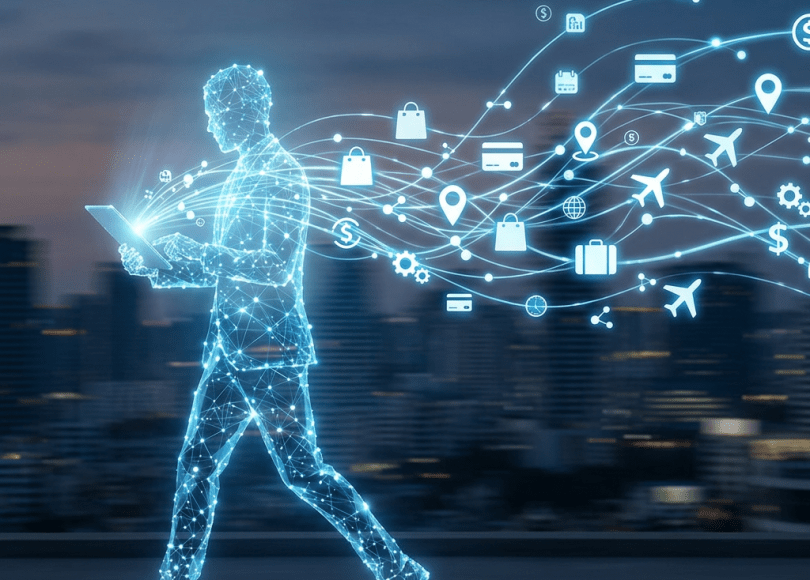
 You have never met your digital clone.
You’ve never seen it.
You can’t log into it.
You can’t delete it.
Yet it may know:
- What you buy
- What you watch
- What you search
- Where you travel
- When you sleep
- What devices you own
- Which ads you click
- What you’re likely to buy next
And in some cases…
It may know those things better than your friends do.
Welcome to the world of digital profiling.
A world where thousands of tiny actions create a version of you that exists entirely inside databases, algorithms, and advertising systems.
Most people know data is collected.
Very few understand how much can be inferred from it.
In this deep dive, we’ll uncover:
- 👤 What a digital profile really is
- 📊 How companies build digital clones
- 🕵️ What data points reveal about you
- ⚠️ Why prediction is more valuable than information
- 🤖 How AI is making profiling more powerful
- 🛡 How to reduce unnecessary tracking
Because today…
Your online identity may be more detailed than your real-world identity.
What Is a Digital Clone?
A digital clone isn’t an actual copy of you.
It’s a model.
A collection of data points that attempts to predict:
- Interests
- Behaviors
- Preferences
- Habits
- Decisions
Think of it as:
A computer-generated version of your behavior.
Not your body.
Not your personality.
Your patterns.
The Internet Collects Tiny Clues
Most people imagine tracking as something dramatic.
In reality it often looks like:
- Clicking a link
- Watching a video
- Searching for a product
- Visiting a website
- Opening an email
Each action seems meaningless.
Individually, it is.
Collectively, it’s powerful.
Why One Piece of Data Doesn’t Matter
Imagine I know:
You searched for running shoes.
Not useful.
Now imagine I know:
- You searched for running shoes
- You joined a marathon group
- You watch fitness videos
- You buy protein powder
- You track workouts
Now I can infer something.
Patterns create understanding.
The Real Product Is Prediction
Most people think data collection is about:
Knowing what you did.
Often it’s about:
Predicting what you’ll do next.
Questions like:
- Will you buy a car?
- Are you moving?
- Are you changing jobs?
- Are you expecting a child?
- Will you click an ad?
Predictions are valuable.
Very valuable.
Your Shopping Habits Reveal More Than You Think
Think about a few purchases:
- Baby products
- Gym equipment
- Home office furniture
- Travel accessories
These purchases tell stories.
Not just about products.
About life changes.
Companies look for signals.
Signals become predictions.
Why AI Changed Everything
Years ago data analysis was limited.
Now AI can analyze:
- Millions of behaviors
- Billions of interactions
- Massive datasets
AI doesn’t get tired.
AI doesn’t miss patterns easily.
And that’s making digital profiles increasingly sophisticated.
Your Devices Are Constantly Creating Signals
Think about how many devices you use:
- Phone
- Laptop
- Smart TV
- Smartwatch
- Tablet
Every device creates signals.
Not necessarily personal secrets.
Behavioral clues.
And behavioral clues add up.
The Creepy Advertisement Moment
Almost everyone has experienced this:
You think:
“How did this ad know I wanted that?”
Usually the answer isn’t mind reading.
It’s pattern recognition.
Systems observed behavior.
Behavior suggested intent.
Intent influenced advertising.
Why Data Brokers Exist
Many people are surprised to learn entire industries exist around data aggregation.
These businesses focus on:
- Collecting
- Organizing
- Analyzing
- Selling insights
The modern data economy is enormous.
Because information has value.
The Biggest Myth: “I Have Nothing to Hide”
This misses the point.
Privacy isn’t only about hiding.
It’s also about:
- Control
- Context
- Choice
The issue isn’t whether you’re hiding secrets.
The issue is whether others should automatically know everything.
Can Companies Really Predict People?
Not perfectly.
Humans remain complicated.
But prediction models are becoming increasingly accurate in many situations.
Especially when:
- Large datasets exist
- Behavior is consistent
- Patterns repeat
And humans repeat patterns a lot.
Warning Signs You’re Creating an Extensive Digital Profile
🚩 Always signed into accounts
More activity becomes connected.
🚩 Using the same ecosystem everywhere
Convenient, but revealing.
🚩 Location services enabled constantly
Creates more signals.
🚩 Smart devices in every room
Generates additional data.
🚩 Never reviewing privacy settings
Most people don’t.
How To Reduce Unnecessary Profiling
Now the important part.
🔐 1. Review Privacy Settings
Start with major accounts.
🛡 2. Limit App Permissions
Especially location access.
📱 3. Audit Connected Devices
Understand what you’re using.
🌐 4. Separate Work and Personal Activity
Reduce unnecessary mixing.
🚫 5. Think Before Installing New Apps
Every app creates another relationship.
🔍 6. Understand the Trade-Off
Convenience often requires data.
Awareness matters.
Comparison: Real You vs Digital You
| Real You | Digital You |
|---|---|
| Thoughts | Searches |
| Conversations | Messages |
| Habits | Activity patterns |
| Preferences | Click history |
| Decisions | Purchase history |
The Bigger Problem: Your Digital Clone Never Sleeps
You log off.
Your profile doesn’t.
You stop browsing.
Your profile remains.
You forget old activity.
The systems don’t.
That’s what makes digital profiling so powerful.
And so misunderstood.
Final Thoughts: The Most Detailed Version of You Might Exist Inside a Database
Most people think their identity exists in:
- Their wallet
- Their passport
- Their social media profiles
Increasingly, that’s not true.
A huge part of modern identity exists in:
- Databases
- Models
- Predictions
- Algorithms
Invisible systems making educated guesses about who you are and what you’ll do next.
And whether you realize it or not…
Your digital clone is growing every day.
Frequently Asked Questions (FAQ)
❓ What is a digital clone?
A digital clone is a data-driven profile built from behavior, activity, and interactions.
❓ Are companies really tracking everything?
Not everything, but many systems collect data points that help build behavioral profiles.
❓ Why do companies collect behavioral data?
To improve services, personalize experiences, and make predictions.
❓ Can AI predict future behavior?
AI can identify patterns and estimate likely outcomes, though predictions are never perfect.
❓ What is digital profiling?
The process of analyzing data to understand preferences, habits, and behaviors.
❓ Can I stop all tracking?
Completely eliminating tracking is difficult, but users can significantly reduce unnecessary data collection.
Final Call to Action
Tonight:
- Review app permissions
- Audit your privacy settings
- Check location access
- Remove apps you don’t use
- Think about what data you’re generating every day
Because the most detailed version of you…
May not be the person in the mirror.
It may be the one living inside a database.
Discover more from Spyboy blog
Subscribe to get the latest posts sent to your email.
