 Posted by
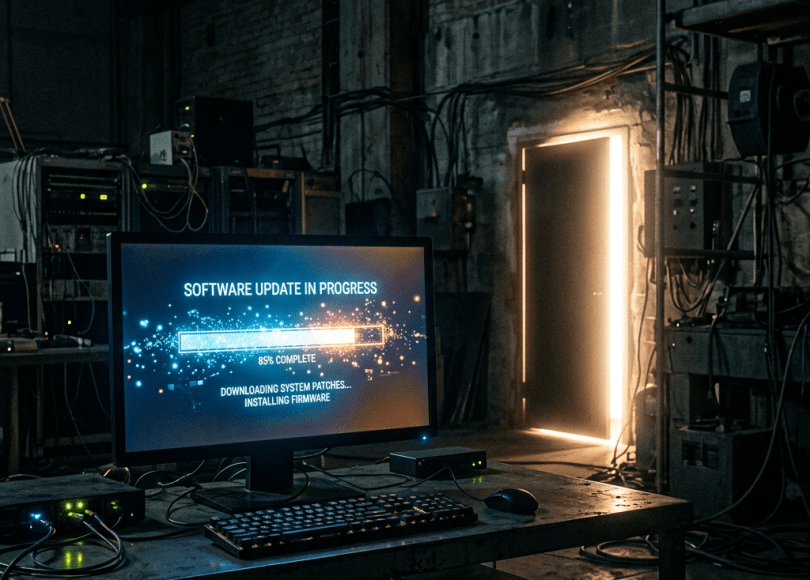
 Imagine installing a software update.
Exactly like you’ve done hundreds of times before.
The update comes from a trusted company.
It’s digitally signed.
Your antivirus doesn’t complain.
Your IT department approves it.
Everything looks completely normal.
Except…
The update quietly opens a hidden door into your network.
Not because someone hacked you.
But because someone hacked the company you trusted.
This wasn’t science fiction.
It became one of the most sophisticated cyber-espionage operations ever discovered.
The target wasn’t one company.
Or one government.
Or one country.
It affected thousands of organizations around the world.
And for months…
Almost nobody noticed.
A Company Almost Nobody Had Heard Of
Before 2020, few people outside the IT industry knew about SolarWinds.
Yet thousands of organizations depended on one of its products.
That product helped administrators:
- Monitor servers
- Track network health
- Manage infrastructure
- Detect problems
It became part of the daily operations of many enterprises.
Including government agencies and Fortune 500 companies.
The Attack Didn’t Start With the Victims
Most cyberattacks work like this:
Attacker ➜ Victim
SolarWinds was different.
It looked more like:
Attacker ➜ Trusted Software Company ➜ Thousands of Customers
This is called a supply chain attack.
Instead of attacking every customer individually…
Attack the supplier.
Then let the supplier unknowingly deliver the malicious code.
What Is a Supply Chain Attack?
Imagine buying bottled water.
You trust the manufacturer.
You don’t test every bottle yourself.
Software updates work similarly.
Organizations trust software vendors to deliver safe updates.
A supply chain attack abuses that trust.
The software isn’t fake.
The update isn’t counterfeit.
The trusted product itself has been compromised before it reaches customers.
The Malicious Update
Attackers reportedly inserted malicious code into legitimate SolarWinds software updates.
Those updates were digitally signed and distributed through normal channels.
To customers, nothing looked suspicious.
They simply installed what appeared to be a routine update.
That’s what made the operation so effective.
Patience Was the Real Weapon
Unlike ransomware groups seeking quick payouts…
These attackers appeared to value patience.
After gaining access, they reportedly:
- Waited quietly.
- Observed systems.
- Selected targets carefully.
- Avoided unnecessary activity.
This style of operation is often associated with Advanced Persistent Threats (APTs).
The objective isn’t speed.
It’s remaining undetected.
Months Passed
Perhaps the most astonishing part of the story is how long the operation remained hidden.
Many affected organizations continued operating normally.
No flashing warnings.
No ransom demands.
No obvious system failures.
The attackers allegedly focused on stealth rather than disruption.
That made detection incredibly difficult.
Who Discovered It?
The operation eventually came to light after FireEye (now part of Trellix) disclosed that it had experienced a sophisticated intrusion while investigating suspicious activity.
During that investigation, researchers traced the compromise back to the SolarWinds software update.
One investigation uncovered a much larger campaign.
Thousands of Organizations Affected
Public reporting indicated that approximately 18,000 customers received the affected software update.
Importantly…
Receiving the update did not necessarily mean every organization suffered further compromise.
Investigators believe the attackers selected a much smaller subset for deeper follow-on activity.
This distinction is often misunderstood.
Why This Attack Changed Everything
Before SolarWinds, many organizations believed:
“If updates come from trusted vendors, they’re safe.”
SolarWinds challenged that assumption.
Now companies ask:
- How do we verify trusted software?
- What happens if a supplier is compromised?
- How much trust should we place in software updates?
Trust itself became part of cybersecurity.
Attribution and International Attention
The attack quickly became an international issue.
Multiple governments publicly attributed the campaign to actors associated with Russia.
Russia denied involvement.
Regardless of attribution debates, the incident reinforced that cyber-espionage has become an important element of international relations.
Lessons From SolarWinds
🔐 Trust must be verified.
Even trusted suppliers can become targets.
🏢 Supply chain security matters.
Organizations inherit some of their vendors’ risks.
👁️ Detection is as important as prevention.
No defense is perfect.
Finding attackers quickly is essential.
⏳ Sophisticated attackers are patient.
The loudest attack isn’t always the most dangerous.
🌍 Cybersecurity is interconnected.
One compromised supplier can affect thousands of organizations.
Timeline
| Date | Event |
|---|---|
| Early 2020 | Malicious code introduced into SolarWinds software updates |
| Months later | Organizations unknowingly install affected updates |
| December 2020 | FireEye discloses its investigation, leading to broader discovery |
| Following months | Global investigations and remediation efforts continue |
Frequently Asked Questions (FAQ)
What was the SolarWinds attack?
A sophisticated supply chain cyber-espionage campaign in which malicious code was inserted into legitimate SolarWinds software updates.
What is a supply chain attack?
A cyberattack that targets a trusted supplier to reach downstream customers.
Were all SolarWinds customers hacked?
No. While many customers received the affected update, investigators believe only a smaller subset experienced additional targeted compromise.
Why was the attack difficult to detect?
The malicious software arrived through trusted update mechanisms and operated with a strong emphasis on stealth.
Why is SolarWinds still important today?
It fundamentally changed how organizations think about software trust, third-party risk, and supply chain security.
Final Thoughts
The SolarWinds operation didn’t become famous because it was loud.
It became famous because it was quiet.
There were no ransom notes.
No dramatic countdown timers.
No obvious destruction.
Just patience.
Stealth.
And an extraordinary understanding of trust.
It reminded the cybersecurity world that the most dangerous attacks aren’t always the ones making headlines.
Sometimes…
The greatest threat is the one you don’t realize is already inside your network.
Discover more from Spyboy blog
Subscribe to get the latest posts sent to your email.
