
 Posted by
 It’s Just a TV…
Or is it?
You bought it to watch movies.
Netflix.
YouTube.
Disney+.
Prime Video.
Football.
News.
Gaming.
To you…
It’s just another television.
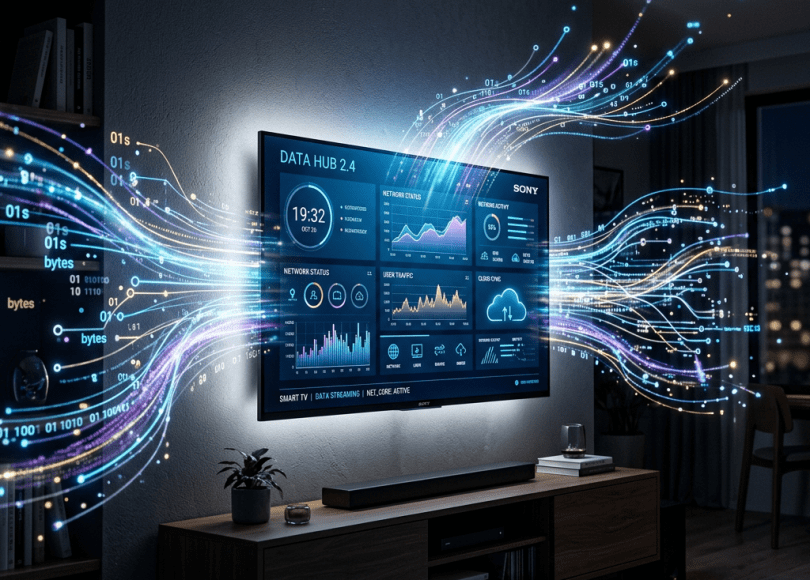
But today’s Smart TV is actually a computer.
It has:
- Wi-Fi
- Bluetooth
- Microphones (on some models)
- Cameras (some older or specialized models)
- An operating system
- Advertising IDs
- Voice assistants
- App stores
- Internet connectivity
- Cloud services
Unlike your old television…
A Smart TV can communicate with the internet every single day.
Sometimes…
Even when you’re not actively watching it.
So the question isn’t:
“Can my Smart TV collect data?”
The question is:
“How much?”
The answer surprises most people.
Your TV Knows What You Watch
Every time you open:
Netflix.
Prime Video.
Disney+.
YouTube.
Apple TV.
The TV itself may record information about app usage, depending on the manufacturer, operating system, and privacy settings.
This can include:
- Which apps are opened
- How often they’re used
- Crash reports
- Device diagnostics
- Performance information
This helps improve software and personalize recommendations, but it also means your TV is generating data about how it’s used.
Automatic Content Recognition (ACR)
This is one of the least understood Smart TV features.
It’s called:
Automatic Content Recognition
or
ACR
Many Smart TVs include some form of ACR technology.
Its purpose is generally to recognize what content is playing so the TV can support features such as:
- Personalized recommendations
- Viewing statistics
- Interactive experiences
- Advertising measurement
How it works and what data is collected varies by manufacturer and your settings.
Many TVs allow you to review or disable related features.
Your TV Doesn’t Just Know Netflix
Here’s what surprises people.
Depending on the implementation, ACR may be able to recognize content regardless of whether it comes from:
- Cable TV
- Satellite
- Streaming apps
- Game consoles
- Blu-ray players
Not every TV behaves the same way, but this is why reviewing privacy settings matters.
Voice Assistants May Hear You
Many Smart TVs support:
- Google Assistant
- Amazon Alexa
- Manufacturer voice assistants
These features require voice input to function.
If you enable voice control, audio may be processed according to the service’s privacy policy.
Review whether you actually use voice features.
If you don’t…
You may prefer to disable them.
Your TV Has an Advertising ID
Just like many smartphones…
Some Smart TV platforms include advertising identifiers.
These identifiers help deliver personalized advertising and measure ad performance.
You can often reset or limit advertising personalization through your TV’s privacy settings.
App Developers Collect Data Too
Your TV manufacturer isn’t the only company involved.
Every streaming app may also collect its own analytics according to its privacy policy.
Think about how many apps are installed:
- Netflix
- YouTube
- Spotify
- Plex
- Prime Video
- Disney+
- Crunchyroll
Each service has its own account system and privacy practices.
Your TV Is Constantly Talking to the Internet
Even when you’re not watching TV, it may connect online for:
- Software updates
- App updates
- Time synchronization
- License verification
- Service availability
- Crash reporting
That doesn’t mean it’s spying.
It means it’s an internet-connected computer.
Your Router Sees It Too
Remember our router article?
Your router probably knows:
- When your TV connects
- How much bandwidth it uses
- Which device is communicating
That’s another reminder that modern privacy is about ecosystems—not single devices.
Can Hackers Hack Smart TVs?
Yes, like any internet-connected device, Smart TVs can have software vulnerabilities.
However, the biggest practical risks for most people are:
- Outdated firmware
- Weak Wi-Fi security
- Malicious apps from unofficial sources
- Shared streaming accounts
- Phishing targeting streaming-service credentials
Keeping the TV updated and installing apps only from official stores greatly reduces risk.
Check These Privacy Settings Today
Every brand is different, but look for settings related to:
Viewing Information
Disable collection if you don’t want personalized viewing analysis.
ACR
Review whether Automatic Content Recognition is enabled.
Advertising
Reset or limit personalized advertising where supported.
Voice Assistant
Disable it if you never use it.
Microphone Permissions
Review which features actually require microphone access.
Automatic Updates
Keep them enabled unless you have a specific reason not to.
Security updates matter.
Common Myths
| Myth | Reality |
|---|---|
| My Smart TV is just a screen | Modern Smart TVs are internet-connected computers. |
| Every Smart TV records conversations | Voice features require microphones, but not every TV behaves the same way or records continuously. |
| Turning off Wi-Fi makes it useless | Many TVs still function as displays for HDMI devices without internet access. |
| Only hackers collect TV data | Manufacturers and app providers may also collect diagnostics and usage information according to their settings and privacy policies. |
Frequently Asked Questions
Can my Smart TV listen to me?
Some models include microphones for voice assistants or voice-enabled remotes. Whether audio is processed depends on the features you enable and the device.
What is ACR?
Automatic Content Recognition is technology used by many Smart TVs to identify what’s playing for features such as recommendations or advertising measurement.
Should I disconnect my TV from the internet?
If you only use external devices (like a game console or streaming box), that’s an option. If you rely on built-in apps, you may prefer to keep it connected while reviewing privacy settings.
Are Smart TVs safe?
Modern Smart TVs include security features, but like any connected device, they benefit from software updates and sensible privacy settings.
Final Thoughts
The biggest privacy surprise isn’t that Smart TVs collect some data.
It’s that most owners never realize they’re using a computer disguised as a television.
A Smart TV can:
Remember apps.
Download updates.
Connect to cloud services.
Support voice assistants.
Offer personalized recommendations.
Measure viewing activity.
That’s not inherently bad.
Many of those features exist because people want convenience.
But convenience should always come with awareness.
Spend five minutes exploring your TV’s privacy menu.
You may find settings you didn’t know existed.
And in today’s connected home…
Understanding what your TV knows is just as important as understanding what your phone knows.
Discover more from Spyboy blog
Subscribe to get the latest posts sent to your email.

One comment