
 Posted by
 By Priya N. | OSINT researcher and digital forensics writer, 6 years in threat intel. Tested August 2026.
What Your Smartwatch and Fitness Tracker Reveal About Your Daily Routine (And Who’s Buying That Data)
Your watch knows when you wake up. It knows your resting heart rate on a Tuesday versus a Friday. It knows you skipped the gym three times last week and felt guilty enough to check the app twice. None of that data stays on your wrist.
Around 21% of Americans wear a smartwatch or fitness tracker daily, according to Pew Research Center, and that number has only climbed since. Most people think of these devices as step counters. They’re closer to a black box recorder for your body, and the flight data gets sold.
Your Body Is Generating a Data Trail You Never Signed Up For
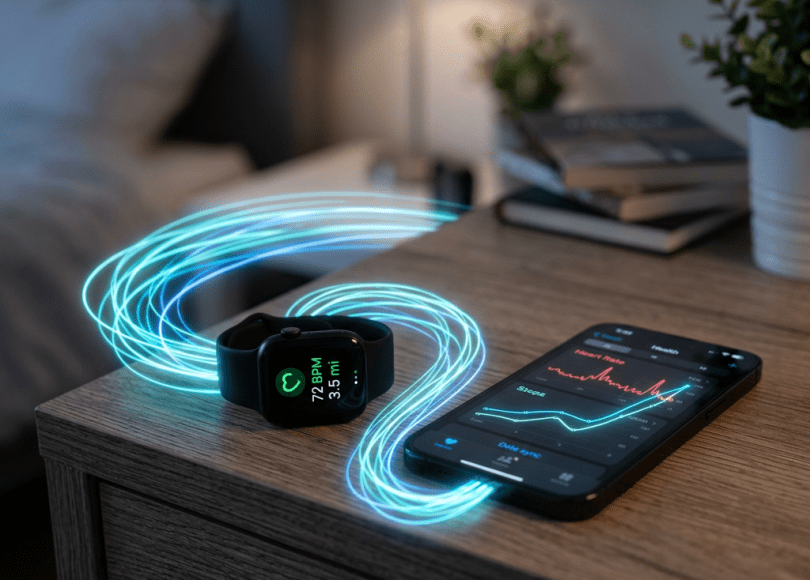
Every time your tracker syncs, it hands over more than steps. Modern wearables log GPS coordinates, sleep stages, blood oxygen, stress markers, and sometimes even menstrual cycle data. That gets bundled into a profile. Not a vague one. A precise, timestamped map of your physical existence.
Here’s the part most users skip past during setup: fitness tracker data almost never falls under HIPAA, the law that protects medical records in the US. CNBC reported that because the device maker, not a doctor or hospital, collects the data, it’s treated as ordinary consumer data. That distinction sounds technical. It isn’t. It means your resting heart rate can legally end up in the same marketplace as your shopping history.
Data brokers don’t care whether the source is a fitness app, a browser cookie, or a smart TV remote. They aggregate whatever they can buy and resell it to advertisers, insurers, and sometimes platforms with a direct financial interest in knowing your habits, including gambling operators looking to profile likely spenders. This is exactly why operator transparency matters before you connect a card or a wallet to anything, and why players increasingly check which brands have been reviewed on BetaNews before handing over financial details to an offshore site. If a broker can resell your sleep pattern, they can resell your deposit history just as easily.
A quick note on that: gambling carries real financial risk, so if any of this touches your own habits, keep it capped and never chase losses.
Who Actually Buys This Stuff
The buyer list is longer than most people assume. GovTech’s reporting on Mozilla and Duke University research found that health and location data from wearables routinely gets aggregated by brokers, then licensed to insurers, employers running wellness programs, and marketing firms building behavioral profiles.
Insurers want to know if you’re active. Employers running “wellness incentive” programs want proof you hit your step goal, and some tie that data to your health premiums. Marketing firms want your location history so they can figure out which gym, pharmacy, or restaurant to advertise next. None of these buyers are hiding in the dark web. They’re publicly traded companies with quarterly earnings calls.
Rock Health’s adoption survey, covered by Fierce Healthcare, found wearable ownership has roughly tripled over the past decade. More devices on more wrists means more granular data flowing into the same handful of broker pipelines. Scale is the whole business model.
The Metadata Nobody Reads Twice
Strip away the marketing language in a wearable’s privacy policy and you’ll usually find three data categories nobody scrutinizes: biometric, locational, and behavioral. Biometric is heart rate and blood oxygen. Locational is GPS trail, sometimes down to which floor of a building you’re on if the device has barometric sensors. Behavioral is the pattern layer, when you sleep, when you’re stressed, when you open the app compulsively at 2am.
Combine all three and you get something closer to a psychological fingerprint than a fitness log. That’s valuable to anyone selling something, not just anyone selling health insurance.
A few numbers worth sitting with. Some fitness apps sync location data as often as every 30 seconds during an active session. Multiply that across a year of runs, walks, and gym visits, and you’ve built a location history more detailed than most surveillance operations could manually produce.
What You Can Actually Do About It
You can’t unplug from this entirely, not if you want the device to function. But you can shrink the exposure.
Check the app’s data-sharing settings, not just the privacy policy summary. Most fitness apps bury a toggle for “share anonymized data with partners” three menus deep. Turn it off.
Disable background location tracking when you’re not actively logging a workout. Your watch does not need to know you’re at the pharmacy at 4pm on a Wednesday.
Read the export option. Several manufacturers let you download and then delete your historical data instead of leaving years of it sitting on a server indefinitely.
None of this makes you invisible. It does make you a less profitable data point, which for most brokers is close enough to the same thing.
FAQ
Does my fitness tracker sell my data even with a passcode-locked phone? Yes. The passcode protects the device itself, not the data already synced to the manufacturer’s servers or app partners. Locking your phone doesn’t stop uploads that already happened during your last sync.
Can I request a company delete my fitness data? Most manufacturers now offer a data deletion request under GDPR or CCPA rules, even for US users outside California, since many comply globally by default. Check the app’s account settings menu, not just customer support.
Is Apple Watch data safer than Fitbit or Garmin? Apple markets stronger on-device processing and stricter default sharing settings, but no major brand is immune to third-party data licensing deals. Read each manufacturer’s current privacy policy rather than trusting brand reputation alone.
Do gyms or insurers actually buy this data? Some corporate wellness programs and insurers do license aggregated wearable data to calculate premiums or incentive payouts. It’s usually anonymized at the point of sale, but re-identification research shows that’s not always as protective as it sounds.
What’s the single easiest fix? Turn off background data sharing with third-party partners in your fitness app’s settings. It’s usually one toggle, and it cuts off the biggest resale pipeline without disabling the device’s core function.
The Wristband Knows More Than the Camera Ever Did
Cars log your location. Smart TVs log your viewing habits. Routers log every device on your network. Your fitness tracker logs the one thing none of those can, what’s happening inside your body, minute by minute. That’s a different category of exposure, and most people configured it once during setup and never looked back.
If you’ve already gone down the rabbit hole on what your car knows about you or what your smart TV is tracking, your wearable deserves the same audit. Open the app. Find the sharing settings. Turn off what you don’t need shared. It takes five minutes and it’s the cheapest privacy upgrade you’ll make this year.
Discover more from Spyboy blog
Subscribe to get the latest posts sent to your email.
